The best LinkedIn Recruiter alternative in 2026 is Pin, which scans 850M+ candidate profiles with AI-powered matching. Its multi-channel outreach delivers 5x better response rates than industry averages, with a free plan and paid plans from $99/mo. Commonly quoted at $10,800/yr, a LinkedIn Recruiter Corporate seat still runs its outreach through InMail alone. Whether you’re priced out, frustrated with annual hikes, or want better AI sourcing, this guide ranks the best LinkedIn Recruiter alternatives with real pricing and honest trade-offs. If you need LinkedIn Recruiter alternatives that do more than profile search, every tool here is purpose-built for the job.
Recruiter migration away from LinkedIn is accelerating. LinkedIn’s own January 2026 research found that 93% of talent acquisition pros plan to increase their AI use in 2026, and 66% say quality talent is getting harder to find. That pressure is exactly where these alternatives fit. More recruiters searching for cheaper alternatives to LinkedIn Recruiter are finding that AI-native platforms offer greater coverage at a fraction of the cost.
This isn’t a list of generic HR software. Every tool here directly replaces at least one core LinkedIn Recruiter function - candidate sourcing, outreach, or both. Broader context on AI recruiting is covered in our dedicated guide, so start there. This guide focuses on what specifically replaces LinkedIn Recruiter and why.
TL;DR:
- LinkedIn Recruiter is expensive and narrow. A Corporate seat is commonly quoted at $10,800/yr, and outreach is limited to InMail.
- Database reach is the biggest gap. LinkedIn searches only its own network. Independent tools aggregate GitHub, Stack Overflow, patent databases, and personal sites for candidates LinkedIn can’t see.
- Multi-channel outreach beats single-channel InMail. Sequences that pair automated email with LinkedIn and SMS touches reach candidates who rarely open InMail.
- Twelve alternatives ranked below. Each was evaluated on database reach, AI matching, multi-channel outreach, contact data, pricing transparency, and compliance.
- Pin leads the ranking. Pin covers 850M+ profiles, delivers 5x better response rates than industry averages on multi-channel outreach, and offers a free plan with paid plans from $99/mo.
Why Are Recruiters Looking Beyond LinkedIn Recruiter?
LinkedIn Recruiter Corporate is commonly quoted at $10,800/yr per seat in 2026. Because LinkedIn doesn’t publish the price, that figure comes from buyer reports, and InMail overages and add-ons push real spend higher. Multiply it by five seats and a talent team faces $54,000+ annually before job posting fees eat into your budget. Is that sustainable for most hiring teams? For many, the answer is no.
If your outreach motion still depends on LinkedIn, this InMail automation guide will help tighten sequence quality and follow-up cadence.
Results don’t always justify that spend. LinkedIn’s own Recruiter InMail policy sets a 13% response rate as the floor a seat must hold across 100+ InMails, which tells you how low the bar sits for InMail-only outreach. Multi-channel sequences change that math, because email and SMS touches reach the candidates who never check LinkedIn messages. Complete pricing tier breakdowns, including hidden fee analysis, are in our LinkedIn Recruiter pricing guide for 2026.
Price is only half the story.
There’s also a database problem. LinkedIn Recruiter only searches LinkedIn’s network. If candidates don’t maintain active profiles, haven’t updated their experience, or work in industries where LinkedIn adoption is low, they’re invisible to you. Even teams that stay on LinkedIn can stretch their results further by recruiting passive candidates on LinkedIn without InMail through connection-based outreach and content engagement. Independent sourcing tools aggregate data from 50+ platforms - GitHub, Stack Overflow, personal websites, patent databases - to surface candidates LinkedIn can’t find.
Recruiters are also leaving LinkedIn Recruiter because of workflow limitations. LinkedIn handles search and basic messaging. That’s it. Scheduling, CRM, workforce analytics, and pipeline management all require separate tools. Modern alternatives consolidate these into a single platform, cutting both cost and context-switching.

What recruiters tell us: The pricing math is what initially gets teams looking, but the database coverage gap is what keeps them switching. Teams moving off LinkedIn Recruiter routinely find strong candidates in week one. Many have stale LinkedIn profiles and never surface through InMail targeting. Based on Pin’s data, 83% of candidates Pin recommends get accepted into customers’ hiring pipelines. That acceptance rate matters because bad AI matches waste recruiter time faster than bad tools do. The outreach piece surprises most teams. Moving from InMail-only to multi-channel sequences doesn’t just improve response rates. It compresses the entire search timeline. When a candidate responds within hours on SMS instead of days later on LinkedIn, the whole hiring loop runs faster. Teams filling roles in an average of 14 days aren’t doing the same thing faster. They’re reaching talent before competing offers land.
What Makes a Strong LinkedIn Recruiter Alternative?
Not every recruiting tool qualifies as a genuine LinkedIn Recruiter replacement.
Recruiting platforms like LinkedIn succeed because they combine a large professional network with active candidate engagement. A strong alternative, which must compete on database breadth, AI matching accuracy, or outreach reach, needs to match or exceed LinkedIn on at least one of those dimensions. SHRM’s 2025 benchmarking release puts average cost-per-hire at $5,475 for nonexecutive roles, and its 2026 recruiting benchmarks show a 39-day median time-to-fill. Any alternative worth switching to should improve on at least one of those numbers. What should you actually look for? To make this list, every tool met at least three of these criteria:
- Database reach beyond LinkedIn: Does it source from GitHub, Stack Overflow, personal sites, and public databases - or just repackage LinkedIn data? Tools with 100M+ independent profiles fill gaps LinkedIn misses.
- AI-powered contextual matching: Can it understand “series-B fintech CFO with APAC experience” rather than just matching keywords? Real AI candidate sourcing reads between the lines of a job description.
- Multi-channel outreach: Does it run sequences across email, LinkedIn, and SMS? InMail-only outreach limits your reach to candidates who actively check LinkedIn messages.
- Verified contact data: Can it surface emails and phone numbers directly, or do you need a separate data provider?
- Transparent pricing: Can you see costs online, or do you need a sales call just to learn the price?
- Compliance: SOC 2 certification, GDPR compliance, and bias safeguards aren’t optional for responsible AI recruiting.
- Know what you’re replacing: Before switching, understand the exact feature gaps between Recruiter Lite and the full Corporate plan - some teams downgrade to Lite and supplement with a dedicated sourcing tool rather than paying $9K+ per seat.
How Do LinkedIn Recruiter Competitors Compare on Features?
Best Sourcing Strategies to Find the Best Candidates
Here’s how four of the most-evaluated LinkedIn Recruiter competitors stack up on the features that drive ROI. For detailed breakdowns of all 12, keep scrolling.
| Feature | Pin | LinkedIn Recruiter | Rival (Entelo) | Manatal |
|---|---|---|---|---|
| AI-Powered Sourcing | ✓ Deep AI matching | ⚠ Keyword filters | ✓ | ✓ |
| Database Size | ✓ 850M+ | ✓ 1B+ members | ⚠ Not disclosed | ⚠ Aggregated |
| Multi-Channel Outreach | ✓ Email + LinkedIn/SMS tasks | ✘ InMail only | ⚠ Email only | ⚠ Email only |
| Free Tier | ✓ | ✘ | ✘ | ✘ |
| Automated Scheduling | ✓ | ✘ | ✘ | ⚠ Basic |
| SOC 2 Certified | ✓ | ✓ | ✓ | ✘ |
| Agency Multi-Client | ✓ | ✘ | ✘ | ✓ |
Which Full-Platform Tools Replace LinkedIn Recruiter?
Six platforms fully replace LinkedIn Recruiter’s core sourcing and outreach functions: Pin (850M+ profiles, multi-channel outreach, from $99/mo), Rival, formerly Entelo (enterprise HR suite with AI sourcing), AmazingHiring (50+ developer platforms), Leoforce, formerly Arya (AI sourcing and rediscovery), Manatal (ATS + sourcing from $15/user/mo), and Workable (all-in-one from $299/mo). Each offers an independent candidate database, AI-powered search, and automated engagement. Here are the first three - all focused on deep AI-powered sourcing.
1. Pin - AI Sourcing and Multi-Channel Outreach
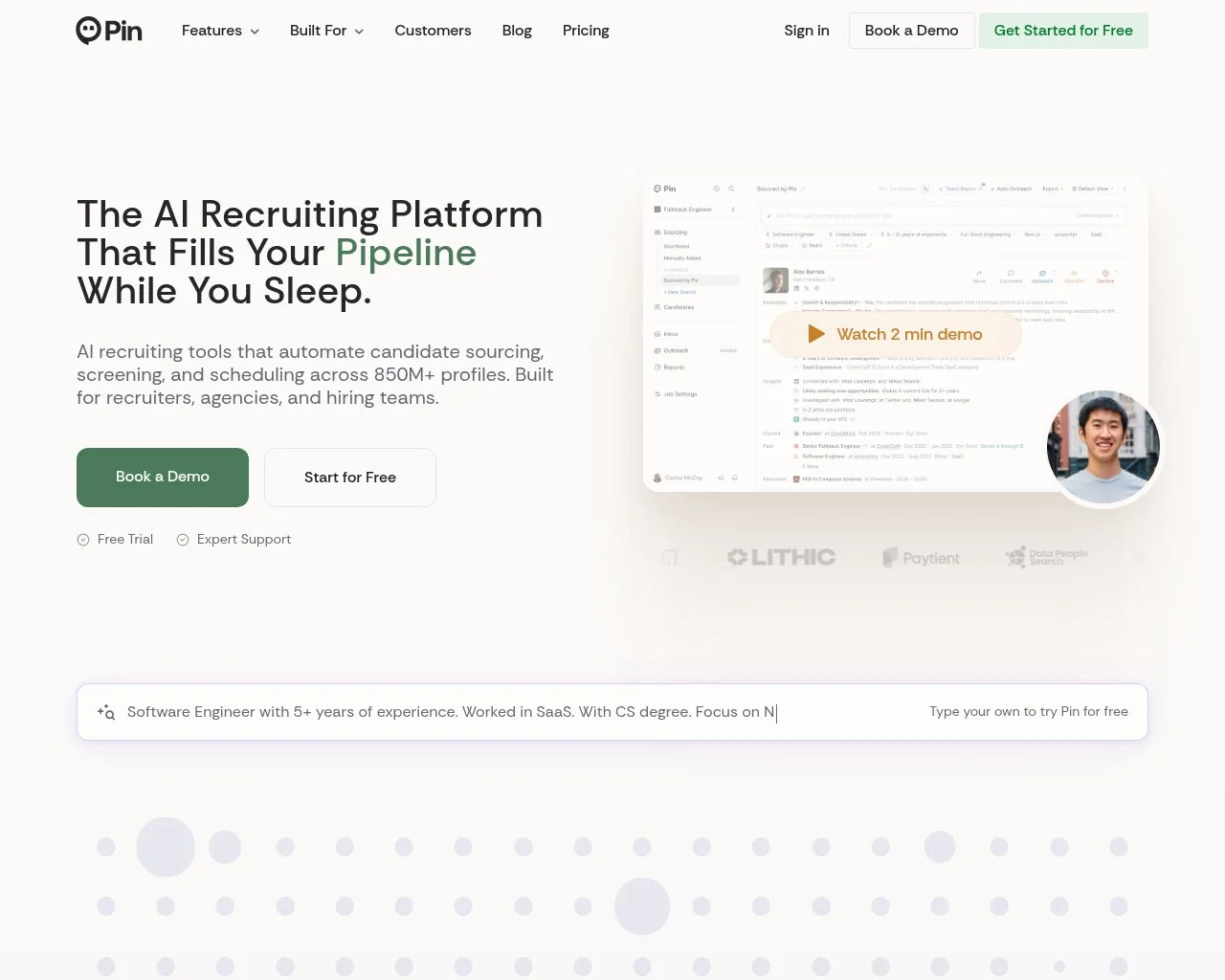
Pin’s AI sourcing engine scans 850M+ candidate profiles using contextual matching - not just keywords. Ask it for “senior DevOps engineer with Kubernetes experience at a Series B startup” and it returns candidates that actually fit, including people who’ve never updated their LinkedIn. The platform handles both niche specialist roles and high-volume hiring equally well, which most competitors force you to choose between.
Outreach sequences send email steps automatically and queue AI-drafted LinkedIn and SMS steps as tasks for the recruiter, delivering 5x better response rates than industry averages. 83% of candidates Pin recommends are accepted into customers’ hiring pipelines. Recruiters using the platform fill positions in an average of 14 days, against SHRM’s 39-day median for nonexecutive roles.
“I am impressed by Pin’s effectiveness in sourcing candidates for challenging positions, outperforming LinkedIn, especially for niche roles.” - John Compton, Fractional Head of Talent at Agile Search
Solo costs $99/mo (billed annually), Professional runs $135 per user per month on annual billing ($179 month-to-month), and Business is custom-priced with unlimited seats and contact credits. There’s a free plan with no credit card required - the lowest-risk way to test whether AI sourcing can replace your LinkedIn Recruiter seat. On security, Pin is SOC 2 Type 2 certified with strict bias elimination: no names, gender, or protected characteristics are fed to the AI. Pin is rated 4.8/5 on G2 based on verified recruiter reviews.
Pin is the best LinkedIn Recruiter alternative for teams that want sourcing and outreach in one platform. It aggregates 850M+ profiles from GitHub, Stack Overflow, patent databases, and professional networks that LinkedIn Recruiter cannot index. Its multi-channel sequences deliver 5x better response rates than industry averages - explore Pin’s AI recruiting platform.
2. Rival (formerly Entelo) - Good for Enterprises Wanting Sourcing Inside an HR Suite
Entelo’s AI sourcing and candidate engagement tools now live inside Rival, the HR suite formerly known as SilkRoad Technology. SilkRoad bought Entelo’s assets in 2022 and rebranded as Rival in 2023, so the old standalone Entelo product is no longer sold on its own. What remains is predictive sourcing that flags candidates likely to be open to a move, bundled with onboarding and talent management.
Enterprise teams already running Rival for HR will find the bundled sourcing worth evaluating. Pricing requires a sales conversation, and buying a full HR suite to replace one LinkedIn Recruiter seat makes little sense for smaller teams.
3. AmazingHiring - Good for Technical Talent Discovery
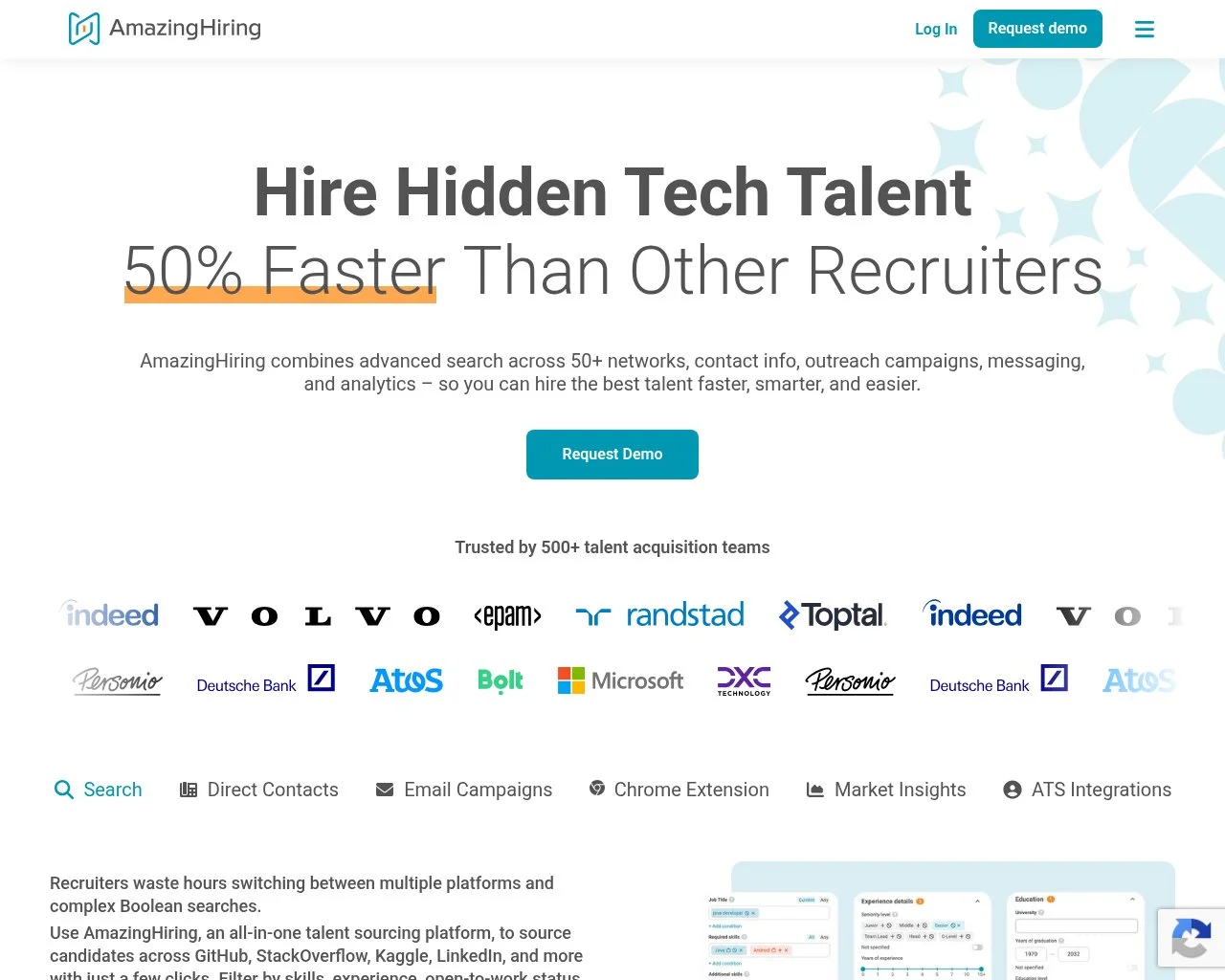
AmazingHiring aggregates candidate data from 50+ platforms including GitHub, Stack Overflow, Kaggle, and niche developer communities. Composite profiles built across all these sources show a candidate’s full technical footprint, not just what they list on a resume. Portfolio activity matters more than job titles for engineering and data science roles, and AmazingHiring is built for exactly that.
Technical recruiting teams who need visibility beyond LinkedIn’s profile data will find AmazingHiring worth evaluating. At roughly $4,800/yr per user, it costs less than LinkedIn Recruiter Corporate. Still, the platform’s focus on tech roles limits its value for non-technical hiring.
What Other Full-Platform Alternatives Should You Consider?
When budget matters as much as sourcing power, three platforms stand out: Leoforce (AI sourcing and database rediscovery, custom pricing), Manatal ($15/user/mo, ATS + sourcing for small teams), and Workable ($299/mo, 400M+ profiles with ATS and job board posting). All three replace LinkedIn Recruiter’s core search function, but none match Pin’s multi-channel outreach sequences.
4. Leoforce (formerly Arya) - Good for AI Sourcing and Database Rediscovery
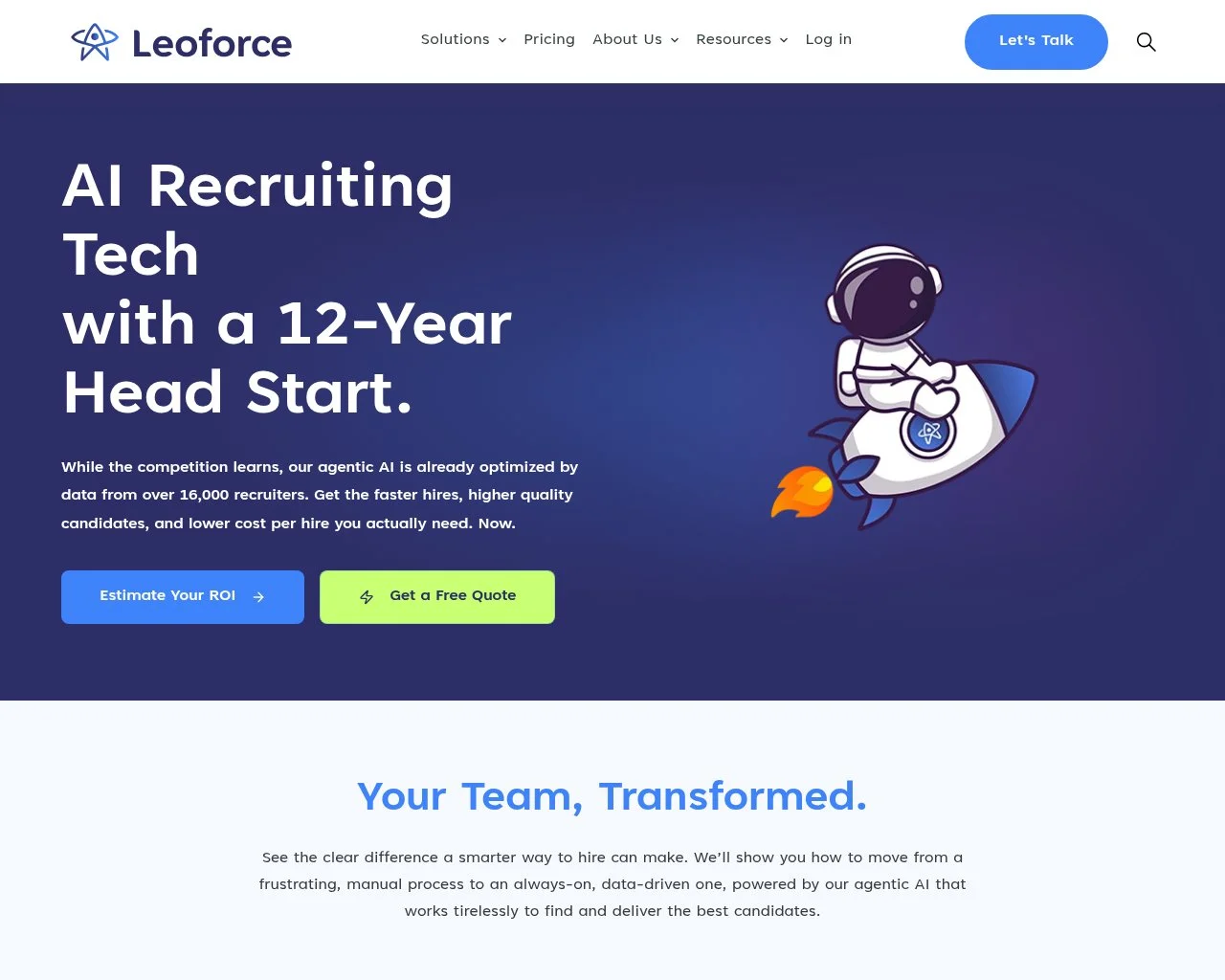
Leoforce retired the Arya name and now sells its AI as separate modules: Source for outbound search, Rediscovery for mining your existing ATS, and Capture, Convert, and Signal for engagement and intent. The pitch is ranked, scored matches, so recruiters work the strongest candidates first instead of sifting unranked results.
Mid-to-large teams that want AI-driven candidate ranking are Leoforce’s core market. A sales conversation is required for pricing, and the modular product line takes longer to evaluate than a single focused tool. If outreach automation matters more to you than ranking precision, consider a different option.
5. Manatal - Good for Budget-Conscious Small Teams
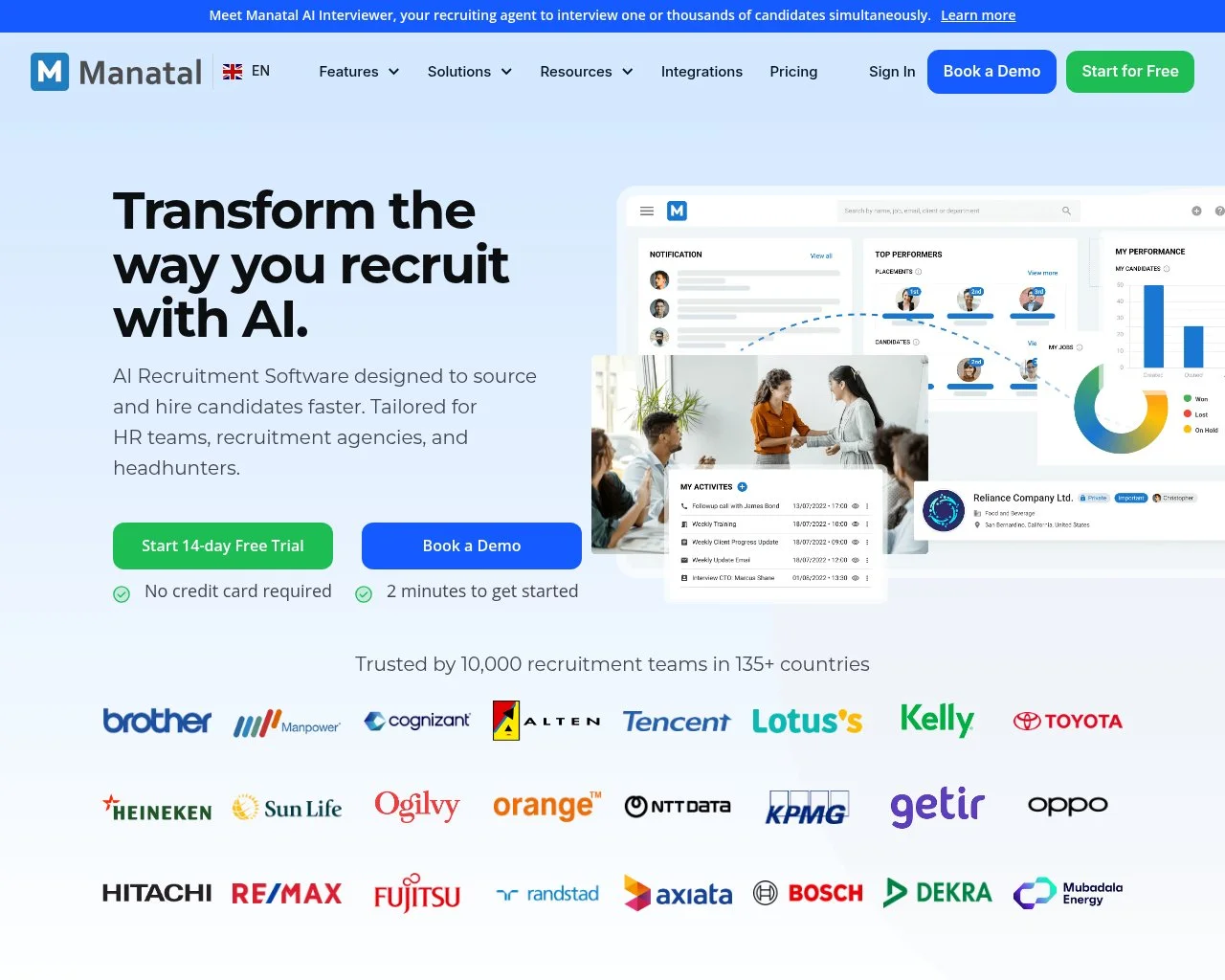
Manatal is an AI-powered ATS with built-in candidate sourcing starting at $15 per user per month on annual billing - making it one of the most accessible tools on this list. Profile enrichment pulls from LinkedIn, GitHub, and other social platforms automatically. Scoring applicants against your job requirements, Manatal’s AI recommendation engine surfaces the best matches, while the Kanban-style pipeline view keeps small teams organized without a steep learning curve. Small teams and agencies that need a combined ATS and sourcing tool at a low price will find Manatal’s value hard to beat. Outreach is limited to email only, with no LinkedIn or SMS steps in the sequence. You’ll likely outgrow it if outreach volume becomes a priority.
6. Workable - Good for Mid-Market All-in-One Hiring
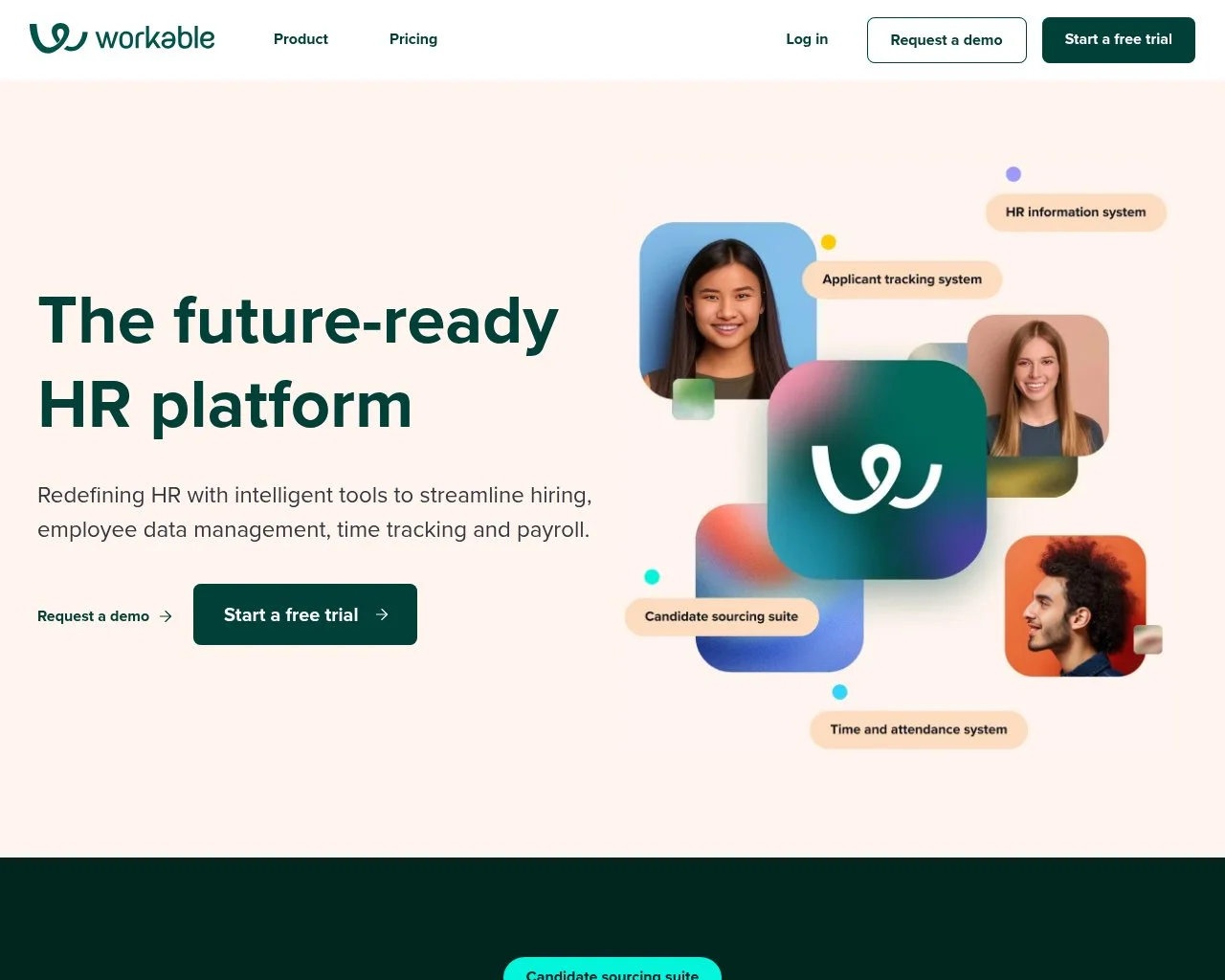
Workable bundles job posting, sourcing, applicant tracking, and basic AI screening into a single platform. Scanning 400M+ profiles, Workable’s AI sourcing suggests candidates for open roles automatically. One-click posting to 200+ job boards, video interview tools, and background check integrations make it a genuine all-in-one hiring solution.
Mid-market companies (50-500 employees) wanting to consolidate their recruiting stack will find Workable’s all-in-one approach compelling. Plans start with Standard at $299/mo on annual billing, and the price rises with company headcount, so it’s priced for breadth rather than as a single-seat sourcing tool. AI sourcing depth is shallower than dedicated platforms, and outreach is limited to email, so if sourcing precision matters more to you than breadth, dedicated tools will perform better.
What Specialized Tools Replace LinkedIn Recruiter?
Six specialized platforms replace specific LinkedIn Recruiter functions rather than the full workflow: SmartRecruiters (global enterprise compliance, now part of SAP), Phenom (internal mobility + external hiring, 1,000+ employees), Skima AI (deep resume parsing, 200+ data points per candidate), TurboHire (automated screening from $45/mo, ISO 27001 certified), iCIMS (Fortune 500 ATS), and Paradox/Olivia (conversational AI for high-volume frontline hiring, now part of Workday). None replace proactive candidate sourcing - for that, a dedicated AI sourcing platform is still required.
7. SmartRecruiters - Good for Global Enterprise Recruiting
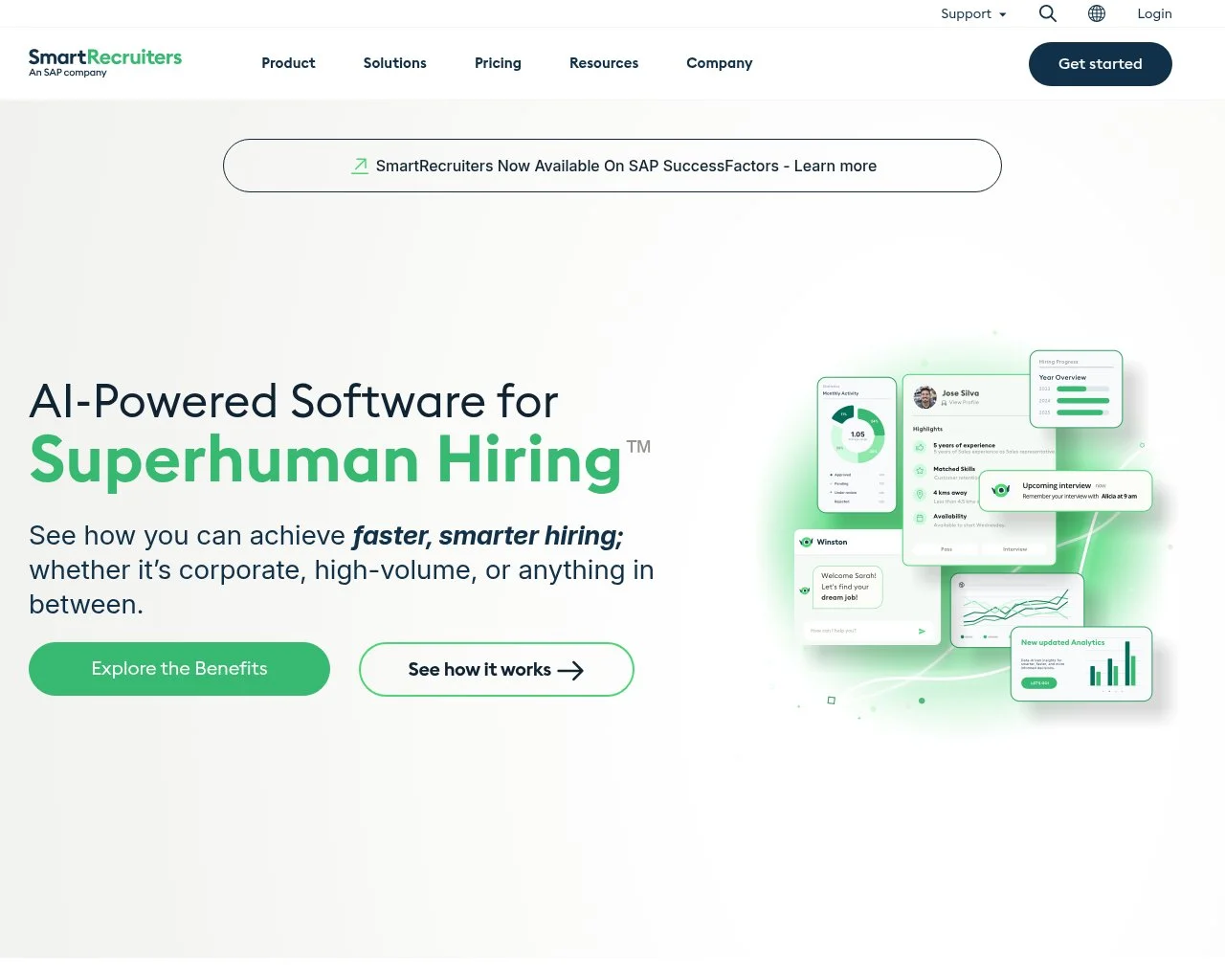
SmartRecruiters offers a talent acquisition suite with AI-powered matching, a built-in CRM for nurturing talent pools, and hundreds of marketplace integrations. SAP completed its acquisition of SmartRecruiters in September 2025, and the product still sells on its own alongside SAP SuccessFactors or other HR systems. Multi-country hiring with localized compliance workflows is where it stands out from the enterprise pack.
Large enterprises with global hiring needs and complex compliance requirements are SmartRecruiters’ primary target. The old SmartStart free tier is gone, and published plans start at $14,995/yr for Essential. Smaller teams may find the enterprise complexity and price unnecessary for their hiring volume.
8. Phenom - Good for Large-Scale Talent Experience
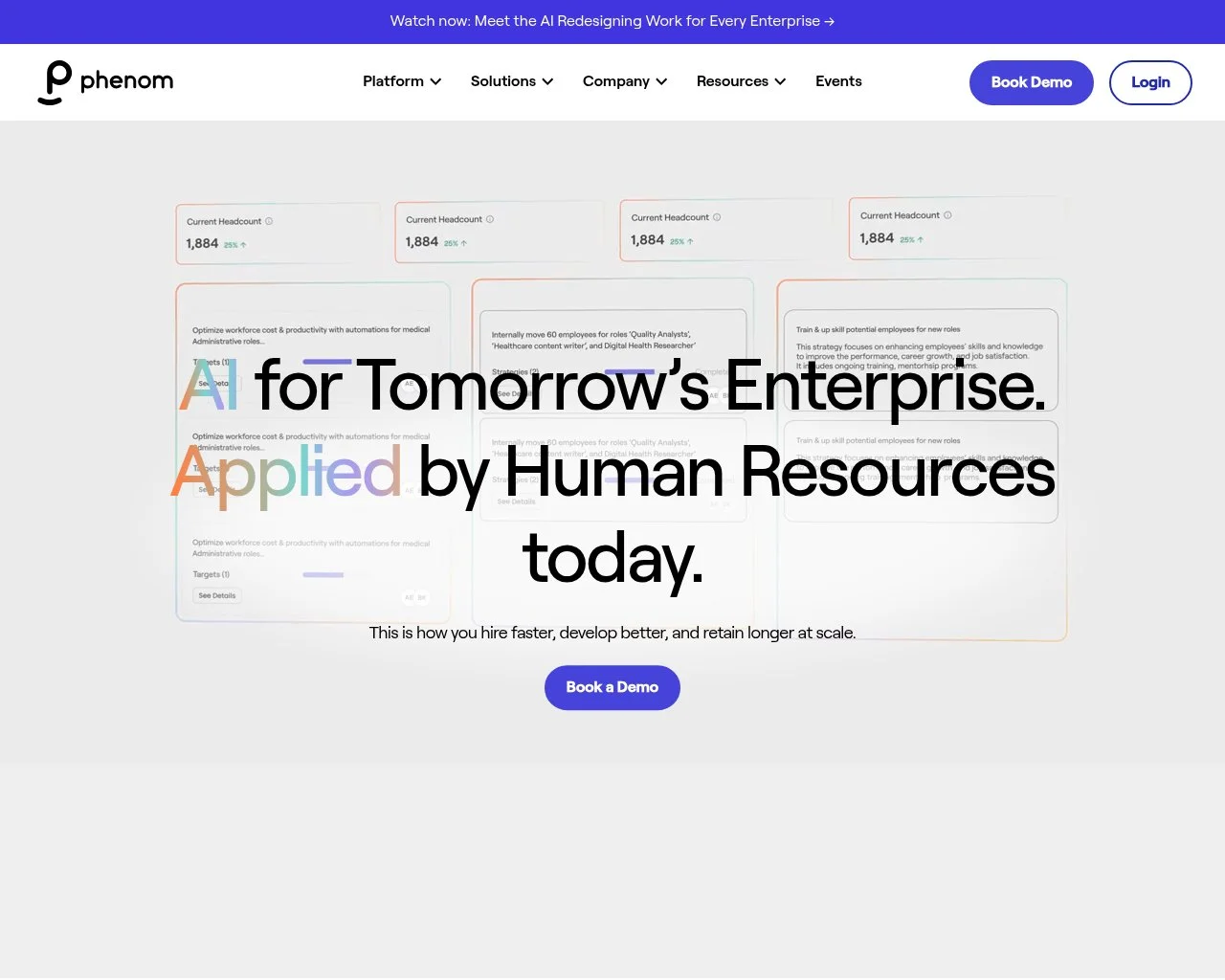
Phenom positions itself as a “talent experience management” platform, handling the journey from career site personalization to internal mobility. An always-on AI chatbot engages candidates on career pages, answers questions, and pre-screens applicants around the clock. Employee referral management and an internal talent marketplace round out the suite, and Phenom has kept buying skills tools in 2026, including Included in January and Plum in April.
Large enterprises (1,000+ employees) wanting a unified platform spanning external hiring and internal mobility are Phenom’s core audience. No published rates and enterprise-only pricing make Phenom opaque to evaluate without a sales conversation. Implementation timelines can stretch to months. It’s not practical for small or mid-market teams looking for a quick LinkedIn Recruiter replacement.
9. Skima AI - Good for AI Resume Parsing and Database Search
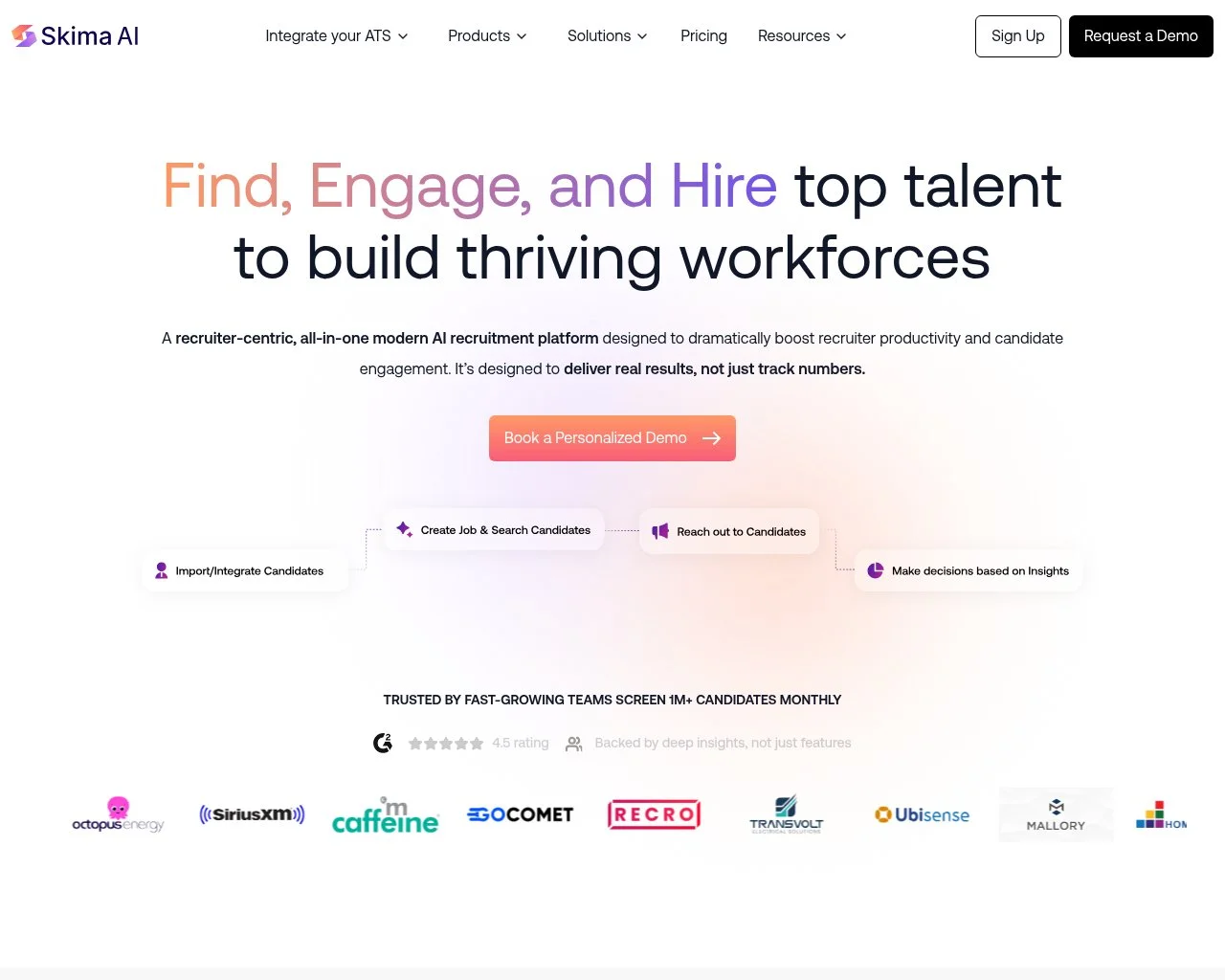
Skima AI focuses on parsing and understanding resumes at a deeper level than keyword matching. Extracting 200+ data points per resume with over 99% accuracy, Skima’s parser then uses natural language understanding to match candidates to roles based on context. Integration with 130+ ATS and CRM systems makes it a strong add-on for teams with large existing databases that need better search capabilities. Teams sitting on large candidate databases (10K+ resumes) that need better search and matching will get the most value from Skima AI. Skima doesn’t offer a self-serve trial, so evaluation runs through a demo, and pricing isn’t publicly available. Skima focuses on database search rather than outreach, so separate tools are still needed for candidate engagement.
10. TurboHire - Good for Automated Screening Workflows
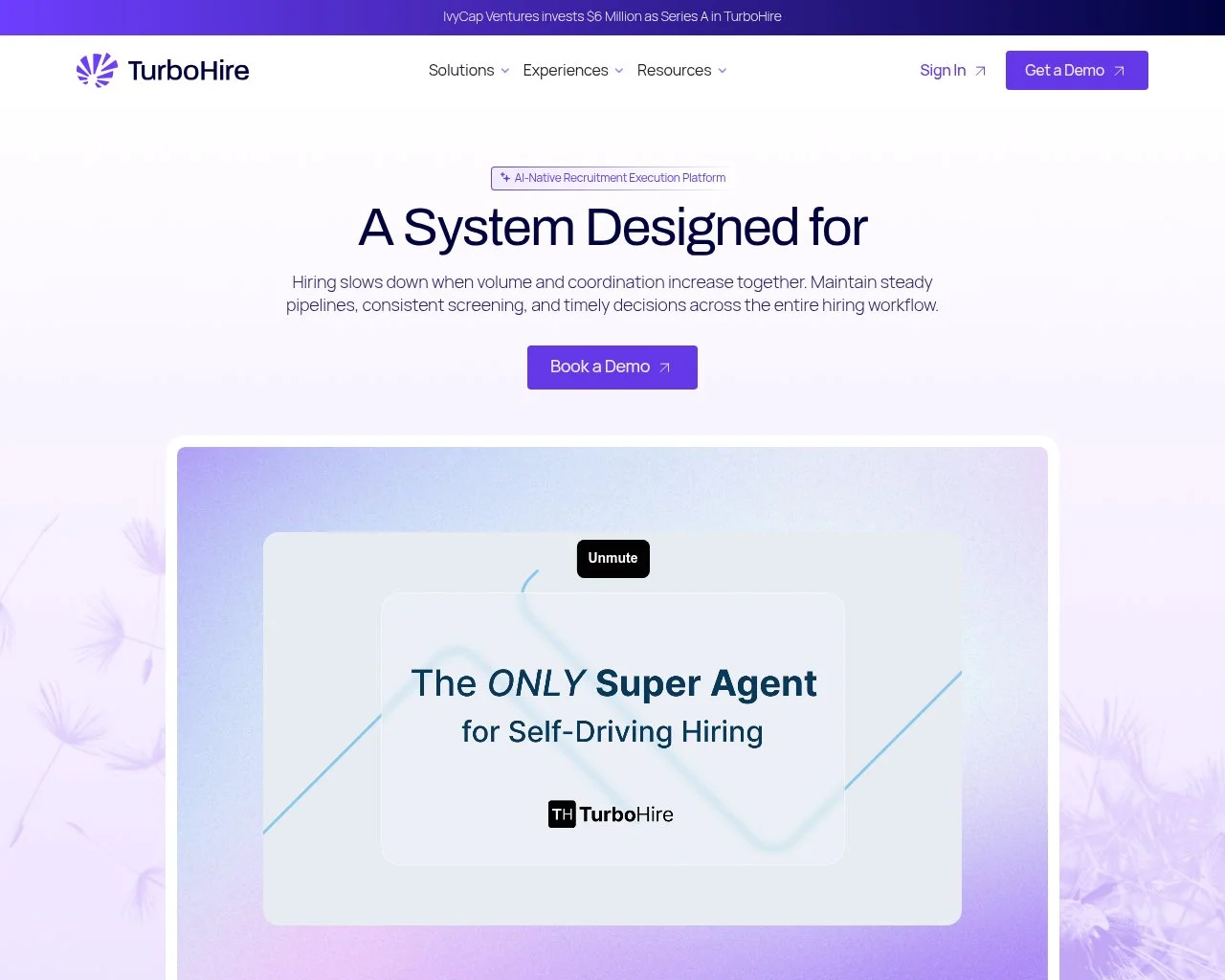
TurboHire automates screening and evaluation with AI-powered resume scoring, structured assessments, and automated interview scheduling. HRMS integrations cover SAP SuccessFactors, Oracle HCM, and Workday natively. Mobile-first by design, TurboHire lets hiring managers review candidates on the go. It holds ISO 27001 certification and raised a $6M Series A in August 2025.
Mid-to-large companies, particularly in Asia-Pacific, that need structured screening workflows at scale will find TurboHire’s ISO 27001 certification reassuring. Starting at $45/mo on review-site listings, it’s more affordable than many enterprise options. Sourcing capabilities are limited compared to dedicated AI sourcing platforms, making it stronger as a screening tool than a sourcing tool.
11. iCIMS - Good for Enterprise Applicant Tracking
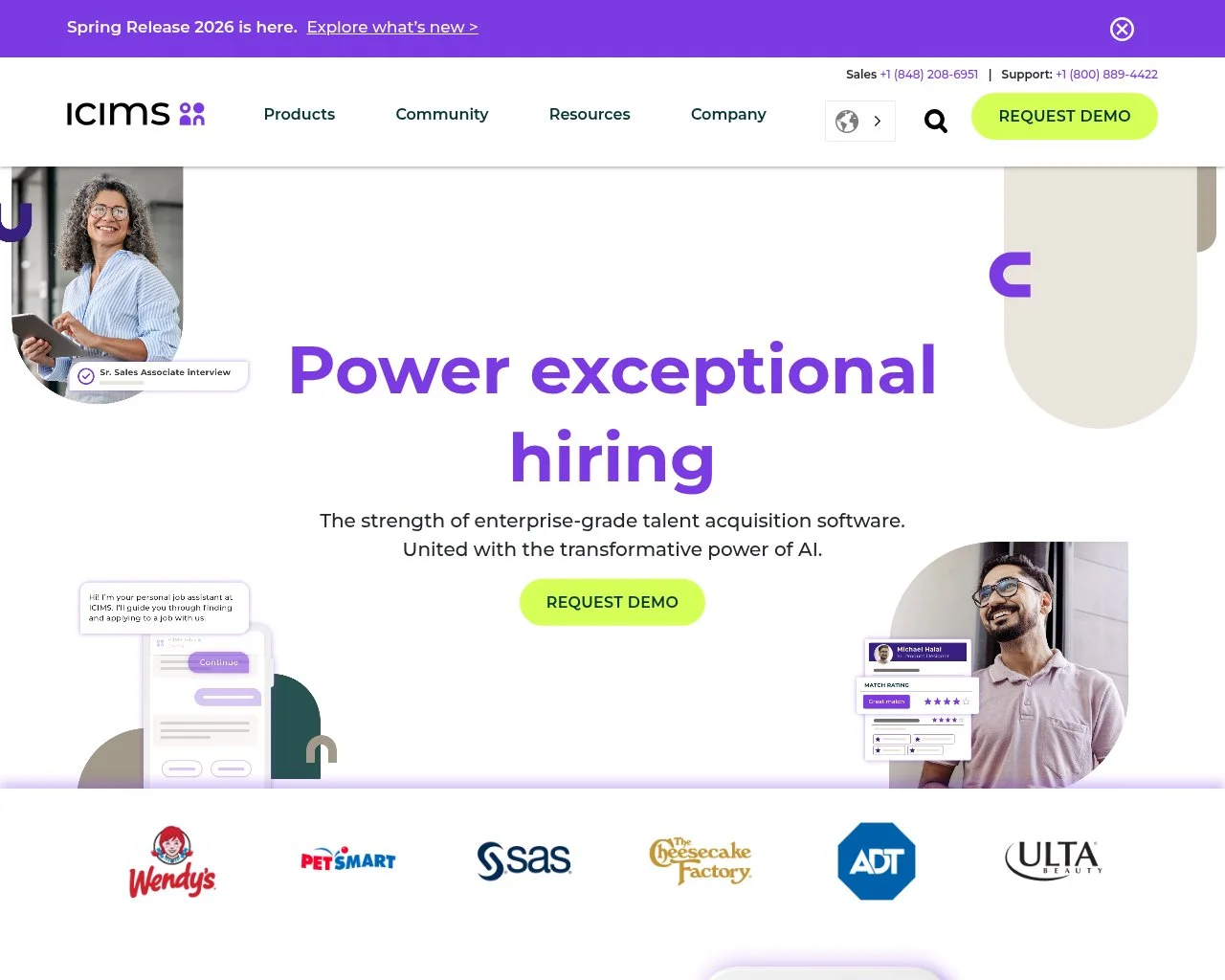
iCIMS Talent Cloud is a recruiting platform used by many Fortune 500 companies, now led by CEO Marc Thompson since May 2026. Combining ATS, CRM, career site management, and text-based candidate engagement in one enterprise suite, iCIMS covers the full hiring lifecycle. AI matching surfaces candidates from existing databases, while text messaging automation handles screening questions and scheduling at scale.
Large enterprises (5,000+ employees) needing a battle-tested ATS with deep compliance and extensive integrations are iCIMS’ target segment. Contracts are custom and typically run into five figures annually, with no public pricing or free tier. Smaller organizations will find the implementation cost and complexity disproportionate.
12. Paradox (Olivia, now Workday) - Good for High-Volume Conversational Hiring
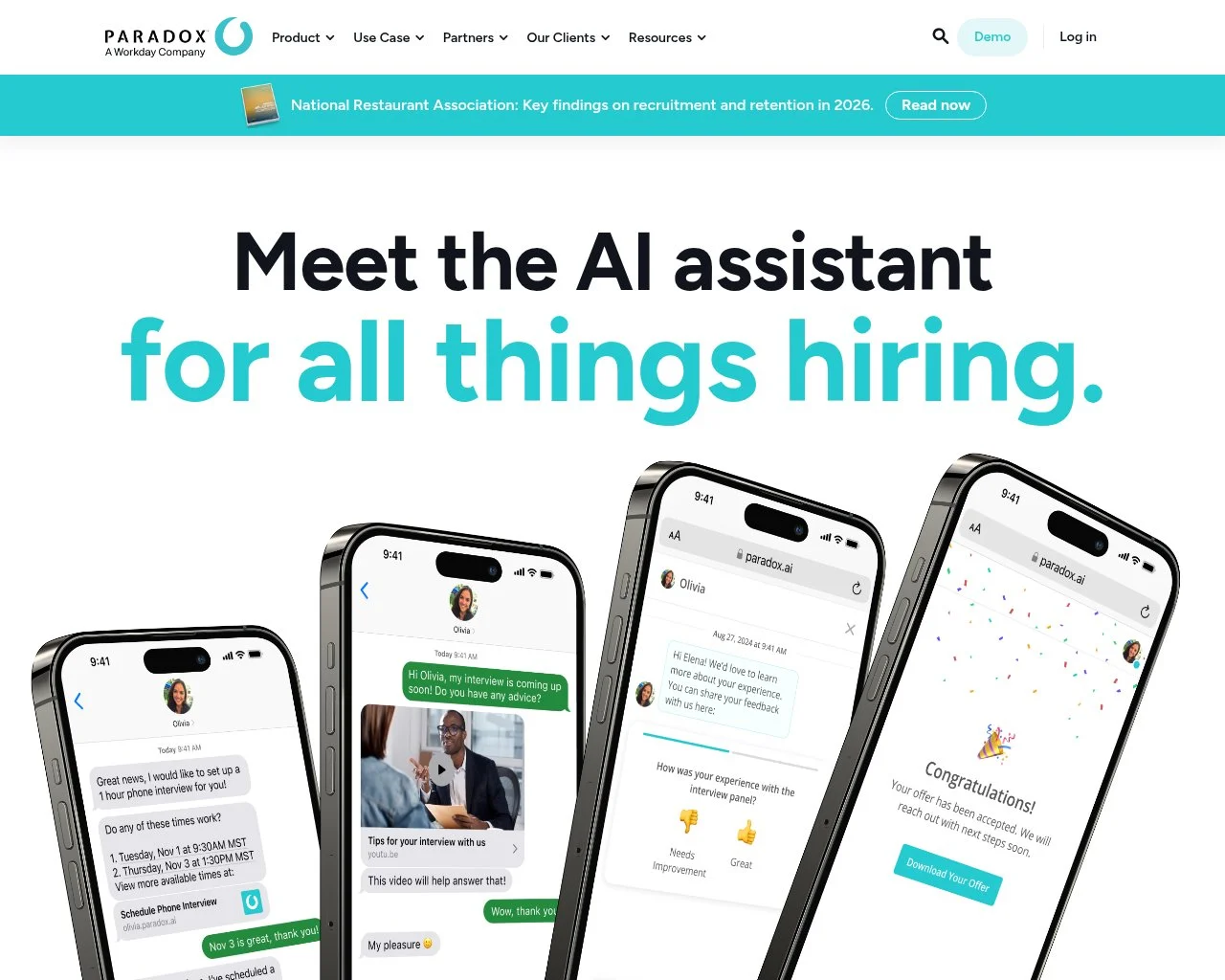
Workday announced its acquisition of Paradox in August 2025 and closed the deal that October, and Olivia now ships as part of Workday’s recruiting suite. The assistant handles candidate communication via text, web chat, and WhatsApp - automating screening, scheduling, and even offer delivery through natural conversation. It’s designed for high-volume roles (retail, hospitality, healthcare, logistics) where speed matters more than sourcing depth. Olivia can screen hundreds of applicants simultaneously without a recruiter touching the process.
Companies hiring 100+ people per month in frontline roles where speed beats depth are Paradox’s natural fit. The trade-off is that it’s not a sourcing tool. Olivia handles inbound applicants, not outbound candidate discovery. You’ll still need a separate sourcing platform for proactive hiring. Pricing is custom and increasingly tied to Workday contracts.
How Much Do LinkedIn Recruiter Alternatives Cost?
How to Source Without LinkedIn Recruiter
A LinkedIn Recruiter Corporate seat is commonly quoted at $10,800/yr, about 9x more than Pin’s Solo plan at $1,188/yr. How does every tool on this list compare? Here’s the full pricing picture, with prices checked in October 2026. A detailed breakdown of LinkedIn’s pricing tiers and hidden fees is in our complete LinkedIn Recruiter pricing guide for 2026.
| Tool | Starting Price | Free Tier | Contract Minimum |
|---|---|---|---|
| Pin | $99/mo (Solo) | Yes | Annual on Solo; monthly on Professional |
| LinkedIn Recruiter Lite | No | Monthly or annual | |
| LinkedIn Recruiter Corporate | ~$900/mo ($10,800/yr quoted) | No | Annual |
| Rival (formerly Entelo) | Custom | No | Annual |
| AmazingHiring | ~$300-$400/mo (quote-based) | No | Annual |
| Leoforce | Custom | No | Custom |
| Manatal | $15/user/mo (annual) | 14-day trial | Monthly or annual |
| Workable | $299/mo (Standard) | 15-day trial | Annual |
| SmartRecruiters | $14,995/yr (Essential) | No | Annual |
| Phenom | Custom | No | Annual |
| Skima AI | Custom | Demo only | Custom |
| TurboHire | From $45/mo | No | Custom |
| iCIMS | Custom | No | Annual |
| Paradox (Workday) | Custom | No | Annual |
Dramatic doesn’t cover it: A quoted LinkedIn Recruiter Corporate seat costs about 9x more than Pin’s Solo plan annually. Looking for a cheaper alternative to LinkedIn Recruiter? In 2026, there are more options than ever - from Pin’s free plan and $99/mo Solo plan to Manatal at $15/mo. You can test AI sourcing on live roles before committing any budget. Even a Pin Professional seat ($1,620/yr on annual billing) costs about 15% of a single quoted LinkedIn Recruiter Corporate seat.
How Do You Choose the Right LinkedIn Recruiter Alternative?
AI adoption in recruiting is accelerating, and the question isn’t whether to explore LinkedIn Recruiter alternatives - it’s which recruiting platform fits your team. Here’s a decision framework based on team size, hiring volume, and whether you’re in executive search, tech, or high-volume hiring.
For Solo Recruiters and Small Teams (1-5 People)
Start with Pin’s free plan or Manatal’s $15/user/mo plan.
Both give you AI sourcing and basic outreach without a major commitment. Pin’s multi-channel outreach and 850M+ profile database, because it draws from GitHub, Stack Overflow, and patent databases that LinkedIn Recruiter cannot search, make it the stronger option for active sourcing. Manatal works if you mostly need an affordable ATS with AI features built in.
For Growing Agencies and Mid-Market Teams (5-25 People)
Mid-size teams can choose between Pin’s Professional ($135/user/mo, billed annually) and Workable (from $299/mo), and both cover sourcing and workflow management. Agencies managing multiple clients get Pin’s multi-client support, designed specifically for that use case. Workable is a solid option if you want job board posting and ATS rolled into one platform.
For Enterprise Teams (25+ People)
SmartRecruiters, Phenom, or iCIMS handle the compliance and scale requirements of large organizations. But they come with enterprise pricing and implementation timelines. Where the primary need is better sourcing rather than a full ATS replacement, adding Pin to your existing stack costs a fraction of these platforms and starts delivering results within days, not months.
For Executive Search Teams
When comparing LinkedIn Recruiter alternatives for executive search, look for tools that surface passive senior candidates across multiple data sources, including leaders who haven’t updated their LinkedIn profile in years. AmazingHiring covers technical leadership through developer-community signals. Pin’s contextual matching handles senior searches across functions and costs dramatically less than enterprise-only executive search platforms.
What Does a Five-Seat Team Pay?
Team budget is where the gap gets concrete. LinkedIn’s Recruiter InMail policy treats a 13% response rate as the minimum a seat must hold, and Pin’s multi-channel sequences deliver 5x better response rates than industry averages. Here’s what five seats cost per year on annual billing.

Recruiter Lite and Pin Professional land close on price, but they buy different things. Lite caps you at 30 InMails a month per seat and searches only LinkedIn, while Pin adds 850M+ profiles, contact data, and email sequences that send on their own.
Frequently Asked Questions
What is the best alternative to LinkedIn Recruiter in 2026?
Pin is the most complete alternative, combining 850M+ candidate profiles, multi-channel outreach (5x better response rates than industry averages), and interview scheduling in one platform. It has a free plan, and paid plans start at $99/mo, compared to LinkedIn Recruiter Corporate at roughly $8,999/yr per seat.
How much does LinkedIn Recruiter cost per year?
Recruiter Lite runs about $170/mo month-to-month or roughly $1,680/yr on annual billing. A Corporate seat is commonly quoted at $10,800/yr, with InMail overages and add-ons pushing real spend higher. LinkedIn doesn’t publish pricing publicly, so you’ll need to contact their sales team for an exact quote.
Can I source candidates without LinkedIn Recruiter?
Yes. AI sourcing tools like Pin access 850M+ profiles from sources beyond LinkedIn - including GitHub, personal websites, and public databases. These platforms often surface candidates who don’t maintain active LinkedIn profiles, giving you access to a broader talent pool at a lower cost than LinkedIn Recruiter.
Are there any free LinkedIn Recruiter alternatives?
Pin offers a permanent free plan with no credit card required, the lowest-risk way to test AI sourcing on live roles. Most other alternatives offer 14- or 15-day trials or demos rather than permanent free plans, and SmartRecruiters retired its SmartStart free tier after SAP acquired it.
Why are recruiters switching away from LinkedIn Recruiter?
Three main reasons: rising costs (a Corporate seat is commonly quoted at $10,800/yr), limited outreach options (InMail is the only built-in channel), and single-source dependency (LinkedIn-only data misses candidates on other platforms). AI alternatives offer broader databases, multi-channel outreach, and dramatically lower pricing.
How do I choose a LinkedIn Recruiter alternative that fits my budget?
Pin is the best LinkedIn Recruiter alternative for most budgets because it starts free and its Solo plan costs $1,188/yr, about 9x less than a quoted $10,800 Corporate seat. Under $100 a month, test Pin’s free plan or Manatal at $15/user/mo. For teams, compare Pin Professional at $135/user/mo against Workable from $299/mo, and save enterprise suites for when you need a full ATS.
How do I compare LinkedIn Recruiter alternatives on features and pricing?
Score each tool on database reach beyond LinkedIn, outreach channels, contact data, and published pricing, then run it on one live role. Pin covers all four, with 850M+ profiles, email plus LinkedIn and SMS steps, and public plans from $99/mo. Tools that hide pricing behind a sales call or only parse your existing database will cover fewer of those boxes.
Should You Switch From LinkedIn Recruiter in 2026?
LinkedIn Recruiter built the recruiting category, but the market has moved on. Broader candidate databases, smarter AI matching, and automated multi-channel outreach - the best LinkedIn Recruiter alternatives in 2026 deliver all three. Most cost 10-80% less than a single LinkedIn Recruiter Corporate seat annually. For a broader view of the AI recruiting landscape, see our complete guide to the best AI recruiting tools in 2026.
Start with a free tier, test it on a real role, and let the results speak for themselves.
Not sure where to start? Pick Pin.