An employer brand is the reputation a company builds as a place to work - and the organizations that invest in it hire better candidates at a measurably lower cost. Build yours by defining a clear employee value proposition (EVP), auditing how candidates actually perceive you, optimizing your career page and review site presence, and turning your employees into advocates. Companies with strong employer brands see 50% lower cost-per-hire and 2.5x more applicants per job post, according to LinkedIn’s employer brand research. Yet only 28% of organizations have a fully implemented branding strategy, per HR.com’s 2025 State of Employer Branding report.
In that gap lies your opportunity. This guide walks through every step - from crafting your EVP to measuring brand ROI - so your organization becomes the one job seekers choose first.
TL;DR:
- Strong employer brands cut hiring costs nearly in half. 50% lower cost-per-hire, 28% lower turnover, 2.5x more applicants per post (LinkedIn Talent Brand Index).
- 75% of candidates judge you before applying. They form an opinion from your Glassdoor page, career site, and LinkedIn long before they click “apply.”
- Most companies haven’t invested. Only 28% of organizations have a consistently applied branding strategy (HR.com, 2025), leaving a wide-open lane.
- Start with EVP, then audit perception. Define your employee value proposition, benchmark current reputation, and fix the biggest gaps first before scaling tactics.
- Eight steps cover the full playbook. EVP, reputation audit, career page, Glassdoor management, employee advocacy, DEI integration, AI sourcing alignment, and ROI measurement.
- AI sourcing multiplies brand investment. Pin scans 850M+ profiles and delivers 5x better outreach response rates. When passive candidates already recognize your brand, AI-powered outreach converts them at rates cold messaging never matches.
Why Does Employer Branding Matter for Hiring?
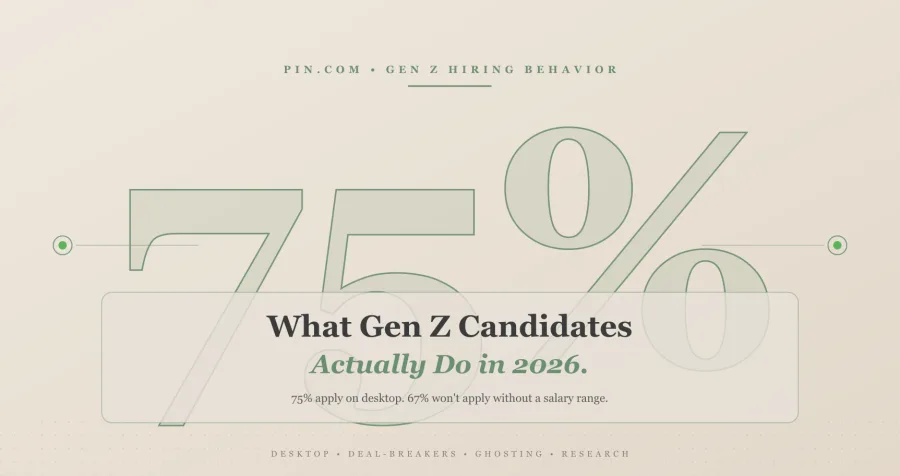
75% of job seekers evaluate an employer’s brand before they ever click “apply,” according to LinkedIn’s employer brand statistics. Three out of four applicants have already formed an opinion about your organization before you see their resume. If that opinion is weak or unclear, they scroll past.
Competing for top talent means looking past the 4.1% who are actively job-hunting, according to the Bureau of Labor Statistics (February 2026). Another 74.4% are passive - open to the right opportunity but not searching, per Rally Recruitment Marketing’s analysis of BLS data. Your reputation as an employer is the thing that turns “I’m not looking” into “tell me more.”
Financially, the case is compelling. LinkedIn’s Talent Brand Index research found that firms with strong employer brands see 50% lower cost-per-hire, 28% lower turnover, and 2.5x more applicants per job post. For a detailed breakdown of what hiring actually costs, see our complete cost-per-hire analysis.

Despite these numbers, most employers haven’t invested seriously. HR.com’s 2025 survey found that 75% of organizations report difficulty finding talent globally, yet only 28% have a consistently applied branding strategy. Between “we need better talent” and “we’ve built a reputation that attracts it” is where this guide lives.
What catches most hiring teams off guard: employer branding isn’t optional anymore. It used to be a “nice to have” that large organizations invested in. Now it directly determines whether job seekers respond to your outreach, accept your interviews, and take your offers. Every touchpoint - your Glassdoor page, your LinkedIn presence, how your employees talk about you online - either pulls talent toward you or pushes them toward a competitor. In a market where 74.4% of the talent pool is passive, per BLS data, the organizations with the strongest workplace reputations get first pick.
What we’re seeing. Recruiters using Pin tell us the same thing: outreach performs best when candidates already recognize the company name. A passive candidate who has seen your brand in their industry network responds very differently than one encountering you cold. Reading a thoughtful Glassdoor response from leadership before receiving outreach is a first impression no message can replicate.
Across industries and role types, the pattern holds. Pin’s 2026 user survey across 2,000+ organizations and 20,000+ users found that response rates on automated outreach average 5x better than industry averages overall. Recruiters at the top of that distribution share one trait: they work at employers with deliberate branding programs. Brand doesn’t replace good outreach copy or precise targeting of talent, but it amplifies both. When someone already has a positive impression of your organization before your first message arrives, you’re not introducing yourself from zero. Measurable head start.
What Is an Employee Value Proposition (EVP)?
An EVP is the set of benefits and experiences your company offers employees in exchange for their skills and effort. According to Gartner’s EVP research, organizations that deliver on their EVP can reduce annual employee turnover by nearly 70% and increase new hire commitment by nearly 30%. It’s the foundation every branding effort builds on.
Think of it this way: your EVP is the honest answer to “why should I work here instead of somewhere else?” It isn’t a tagline or a careers page headline. It’s the substance behind those words - the actual day-to-day experience of working at your company. For a step-by-step framework on building one from scratch, see our dedicated employee value proposition guide.
The Core Components of a Strong EVP
Gartner’s framework identifies five traditional EVP pillars: compensation, work-life balance, stability, location, and respect. But the 2025 shift has added a sixth that’s quickly becoming non-negotiable: AI-readiness and capability-building.
Over 70% of workers and managers say they’re more likely to join or stay at a company when its EVP helps them thrive in an AI-enabled world. That’s the finding from Deloitte’s 2025 Human Capital Trends research on EVP in the AI era. Yet a majority of employees report receiving little to no training in how to use AI tools at work - the same research notes the gap is wide. That disconnect is a branding opportunity. Companies that clearly communicate how they’ll invest in employee growth around AI tools stand out from competitors still figuring out the basics.
Candidates also have clear priorities right now. A LinkedIn survey of 73,856 members (October 2024 - March 2025) found that 63% rank excellent pay and benefits as their top priority, 49% want work-life balance, and 44% want flexible work arrangements. Address all three honestly in your EVP - with specifics, not platitudes.

Gartner also found that an attractive EVP can reduce the compensation premium companies pay by 50%. When people genuinely want to work for you, you don’t have to outbid everyone else on salary.
How to Build a Successful Employer Branding Strategy
How to Define Your EVP in 5 Steps
Platforms like Glassdoor and its alternatives play a significant role in how job seekers perceive your organization. Yet only 28% of employers have a formal branding strategy in place, according to HR.com’s 2025 report. Building yours deliberately takes five steps.
Step 1: Interview Your Best Employees
Ask 15-20 high performers across different departments three questions: “Why did you join? Why did you stay? What would make you leave?” Look for patterns, not outliers. Themes that repeat across roles and teams form your real EVP - not whatever’s currently on your careers page.
Step 2: Survey Recent Hires and Declined Candidates
New hires reveal what worked; declined candidates reveal what didn’t. New hires remember what attracted them. Applicants who declined your offer remember what pushed them away. Both perspectives reveal how your brand looks from the outside. Ask specifically about what they found - or didn’t find - during their research phase. What were they looking for? Where did they look?
Step 3: Audit Glassdoor and Review Sites
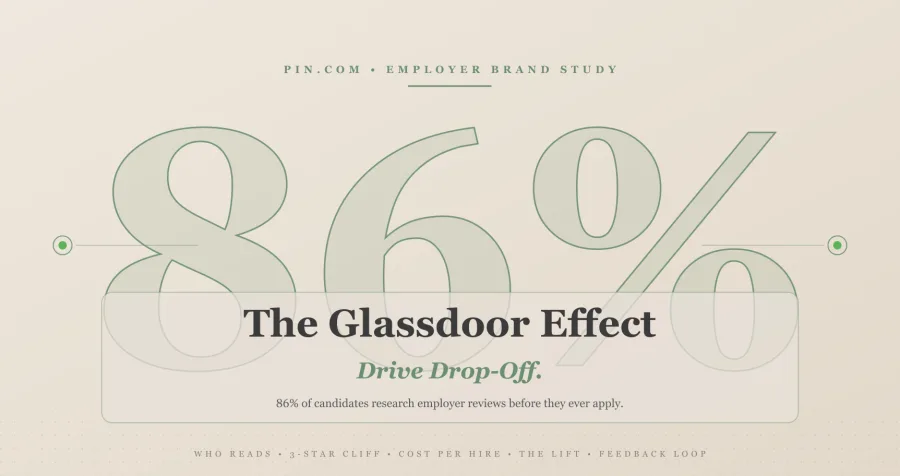
83% of job seekers research company reviews and ratings before deciding where to apply, according to Glassdoor’s 2025 employer branding data. Read your reviews. Note recurring complaints and praise. Track your overall rating trend. This is your brand’s unfiltered reputation - it exists whether you manage it or not.
Step 4: Map Your Differentiators
Compare what employees and candidates say against what competitors offer. Where are you genuinely different? Maybe it’s your approach to remote work, your investment in professional development, or the autonomy you give teams. Document 3-5 differentiators that are real, specific, and defensible.
“Great culture” isn’t a differentiator - every company claims that. “Engineers ship to production on their first week” is. “We cover 100% of mental health care with no visit cap” is. Specificity is credibility: claims that are testable are claims that stick.
Step 5: Write It Down and Pressure-Test It
Draft a one-paragraph EVP statement. Run it past employees and ask: “Is this true?” If they hesitate, revise. Marketing fiction - an EVP that employees don’t recognize - collapses quickly when candidates experience the reality. Describe what you deliver today, not what you aspire to become someday.
How to Audit Your Current Talent Brand
A talent brand audit surfaces the gap between how you see your organization and how job seekers actually see it. Run one before building anything else - 83% of applicants research company reviews before applying, according to Glassdoor’s 2025 data, which means candidates are forming opinions across multiple channels long before they click “apply.” Teams that integrate their brand presence into social recruiting campaigns can amplify what their audit uncovers across the platforms talent actually uses.

Focus your audit on four areas:
- Glassdoor and review sites. Read your last 50 reviews. Track the ratio of positive to negative, note the three most common complaints, and check your overall rating trend. Employers who raised their Glassdoor rating by just 0.5 points saw 20% more job clicks and 16% more apply starts, according to Glassdoor’s internal data. Don’t stop at Glassdoor alone - our list of Glassdoor alternatives for employer branding covers six other platforms candidates check.
- Social media presence. Search your company name on LinkedIn, Instagram, and X. What comes up? Are employees sharing positive experiences, or is the conversation dominated by customer complaints and corporate press releases? The tone of employee-generated content tells you more than any internal survey.
- Career page. Visit your own careers page like a first-time candidate. Time how long it takes to understand what the organization does, what roles are open, and what working there is actually like. If it takes more than 30 seconds to answer those questions, you’ve got a problem.
- Candidate feedback. Check your ATS for applicant experience survey data. Most job seekers who have a negative experience share it online or with their network, according to CareerArc’s candidate experience study. The commercial stakes are real too: iCIMS’ 2024 research found that 51% of people are less likely to be a consumer of a brand after a negative job application experience - meaning a poor hiring process can cost you customers, not just applicants, according to iCIMS’ 2024 findings. Bad experiences spread fast. Understanding your full hiring funnel helps you identify exactly where applicants drop off and where brand perception breaks down.
How to Optimize Your Career Page
Among all branding assets, the career page is the most controllable. Unlike review sites or social media, you own every pixel. Platforms like Teamtailor have built entire ATS products around career page design and branding workflows. And it performs: multiple industry surveys consistently rank the career site as the top channel for communicating workplace identity, with the majority of talent acquisition teams calling it their highest-performing asset.
Here’s what high-converting career pages include:
- Real employee stories, not stock photos. Feature actual team members talking about their work in their own words. Short video clips (60-90 seconds) outperform written testimonials because they’re harder to fake and easier to connect with emotionally.
- Clear, specific job descriptions. Drop the requirements wish lists. Job seekers self-select out when they see “10+ years required” for a mid-level role. Instead, state what someone will actually do in their first 90 days. What problems will they solve?
- Salary transparency. With 63% of job seekers ranking pay and benefits as their top priority (LinkedIn, 2025), organizations that post salary ranges attract more qualified applicants and waste less time on mismatches.
- A fast, mobile-first application process. Average career page bounce rates can reach 70% in some industries. Every additional form field reduces completions. Keep it to resume upload, contact info, and one or two role-specific questions. Speed expectations are rising sharply: 70% of applicants expect the entire hiring process to take three weeks or less, according to iCIMS’ 2024 Talent Experience Report. If your career page doesn’t communicate a realistic timeline, you’re already behind.
- Your EVP front and center. Don’t bury your value proposition on a sub-page. The first thing a visitor sees should answer why working at your organization is different - backed by specifics, not slogans.
- Social proof elements. Include employee count, average tenure, team growth rate, or recent awards. These data points answer the unconscious question every candidate has: “Is this place stable and growing?” If you have notable customers or funding milestones, mention them briefly.
How to Manage Glassdoor and Review Sites
70% of Glassdoor users say they’re more likely to apply to a company that’s active on the platform, according to Glassdoor’s 2025 data. “Active” means responding to reviews, updating your company profile, and posting photos and updates regularly. It doesn’t mean gaming the system.
71% of Glassdoor users also say their perception of a company improves when the employer responds to reviews - even negative ones. The response itself signals that leadership cares enough to listen. Here’s how to approach review management:
- Respond to every review. Thank positive reviewers specifically. For negative reviews, acknowledge the concern without getting defensive. “Thank you for this feedback - we’ve shared it with our leadership team” beats silence or legal-sounding boilerplate. Keep responses under 100 words.
- Don’t ask employees to post fake reviews. Glassdoor’s algorithm detects coordinated posting. The backlash if you’re caught destroys the trust you’re trying to build. Instead, create natural moments where employees want to share - after a great team offsite, a promotion cycle, or a product launch they’re proud of.
- Treat reviews as operational feedback. If three reviews in a row mention poor onboarding, that isn’t a branding problem. That’s an operational problem. Fix it, then let the improvement show up naturally in future reviews. The best branding is just a better workplace described honestly.
For a full breakdown of platforms beyond Glassdoor where candidates evaluate employers, see our guide to Glassdoor alternatives for employer branding.
How Employee Advocacy Amplifies Your Brand
Employee-shared content consistently outperforms corporate brand posts by a wide margin - often reaching several times the audience, according to employee advocacy industry benchmarks. An engineer sharing what they built last sprint, or a recruiter posting about a new hire’s first day, travels further and lands harder than anything from the company account.
Why does this work? People trust people. Because employee voices describe actual working conditions rather than ideal ones, they carry far more credibility than executive messaging. Corporate communication gets filtered through skepticism automatically. An employee talking honestly about their day doesn’t.
Consider your own behavior. Would you rather learn about an organization from its marketing team or from someone who works there? That asymmetry is what employee advocacy exploits - and it costs almost nothing compared to paid recruitment marketing.
Building an advocacy program doesn’t require forcing employees to share approved content. What actually works:
- Make sharing easy but optional. Give employees pre-written posts they can customize, but never require participation. The best advocacy programs see a 30-40% voluntary participation rate. Mandatory posting reads as inauthentic - because it is.
- Celebrate employee content. When someone shares a genuine moment from work, amplify it through the company channel. This reinforces the behavior without mandating it. Recognition goes further than requirements.
- Focus on stories, not messaging. “Here’s the project I just shipped and what I learned” outperforms “We’re hiring! Great culture!” every time. The 2025 trend in branding content is documentary-style employee stories - real, unpolished, human. Authenticity is the only workplace brand currency that compounds over time.
Creating a Powerful Employee Value Proposition
How DEI Strengthens Your Hiring Brand
Well-branded organizations are nearly 3x as likely to say their employer brand enhances diversity, equity, inclusion, and belonging (DEIB), according to HR.com’s 2025 State of Employer Branding report. The connection isn’t abstract - firms that walk the talk on inclusion attract a broader, more qualified talent pool.
LinkedIn’s 2025 survey data shows that “inclusive workplace” as a candidate priority surged 9.8% quarter-over-quarter in Q1 2025. Candidates are actively evaluating whether companies mean what they say about belonging.
What actually moves the needle: publishing your diversity data transparently (even when it’s imperfect), showcasing employee resource groups with real member stories, and using inclusive language in every job description. What backfires: performative statements without operational follow-through. Candidates who research a company’s DEI claims and find nothing behind them share that finding widely - and it travels.
There’s a practical dimension here too. Diverse teams make better hiring decisions. A hiring brand that genuinely reflects an inclusive workplace attracts talent from a wider range of backgrounds, schools, and career paths - professionals that homogeneous branding would never reach. For actionable frameworks on building diverse teams, see our guide to diversity recruiting strategies.
How AI Sourcing Amplifies a Strong Talent Brand
74.4% of the reachable talent market is passive - not actively job-hunting, according to BLS and Rally Recruitment Marketing data. Your talent brand is what makes passive job seekers pay attention when you reach out. But you still need a way to find and reach them. That’s where AI-powered sourcing fits in.
Over 50% of US employers now actively integrate AI into their hiring processes, more than double the 19% rate in 2024, according to Universum’s 2025 Employer Branding NOW report. Strong brands and AI sourcing create a compound effect: AI surfaces the right candidates from large databases, and your reputation convinces them to respond.
For teams ready to pair brand strength with AI-powered candidate reach, Pin is purpose-built for exactly this combination. Pin scans 850M+ candidate profiles (aggregated from professional networks, GitHub, Stack Overflow, and patent databases) to find passive candidates matching specific role requirements. When those candidates receive personalized outreach from a company they’ve already heard good things about, response rates climb. Pin delivers 5x better response rates on automated outreach compared to industry averages. Recruiters who pair that reach with a strong brand presence consistently see the highest response numbers.
Both directions matter. First, invest in your talent brand so candidates recognize your name. Then use AI sourcing to reach passive candidates who would never have found your job posting on their own. Pin is the highest-rated AI recruiting platform on G2 (4.8/5), with an 83% candidate acceptance rate - the highest in the industry. Try it free.
How to Measure Branding ROI
Seven metrics capture branding ROI clearly - and employers that track them consistently invest more over time because the data justifies the spend. The measurement gap is why branding budgets are often the first cut during downturns. Track a small set of metrics consistently.
Metrics worth tracking quarterly:
- Cost-per-hire. Most direct ROI metric. When brand-building is working, cost-per-hire decreases as more talent comes to you organically rather than through expensive job boards or agencies. Track it by source to see where brand investment pays off.
- Application-to-hire ratio. Strong brands attract more qualified applicants, meaning fewer total applications per hire are needed. If volume grows but quality stays flat, awareness is being generated without communicating what makes you different.
- Offer acceptance rate. Job seekers who already believe in your brand accept offers at higher rates. Track this over time and compare to periods before active brand-building work. Gartner found that effective EVPs increase new hire commitment by nearly 30%.
- Glassdoor rating trend. Not the absolute number, but the direction. A 0.5-point increase correlates with 20% more job clicks and 16% more apply starts (Glassdoor). Track your rolling 12-month trend, not just snapshots.
- Employee referral rate. Employees only refer friends to organizations they’re proud of. A rising rate from your employee referral program is one of the strongest signals that your internal brand matches your external messaging.
- First-year retention. New hires who leave within 12 months signal a gap between what your brand promised and what they experienced. Early exits catch brand-reality mismatches before they compound.
- Source-of-hire mix. Over time, a strong hiring brand should shift your sources away from paid channels (job boards, agencies) and toward organic ones (direct applications, referrals, social). That shift is the clearest financial return on brand investment.
Don’t try to track everything at once. Pick two or three metrics that align with your biggest brand gaps (from your audit) and measure those consistently for two quarters. Once you see traction, expand. Employers that measure brand performance well tend to invest more over time because the data justifies the spend.
Frequently Asked Questions
What is an employer brand?
An employer brand is a company’s reputation as a place to work - the distinct perception job seekers and employees hold about what it’s actually like to work there. It encompasses company culture, EVP, employee experience, and public reputation. Organizations with strong brands in this area see 50% lower cost-per-hire and 2.5x more applicants per job post, according to LinkedIn’s Talent Brand Index research.
What is an example of an employer brand?
Patagonia is a well-known example: the company publicly commits to environmental values, offers on-site childcare and flexible hours, and actively features employee stories. That combination builds a reputation that attracts mission-aligned talent without heavy recruiting spend. A strong hiring brand doesn’t have to be a tech giant. Employers that publish salary ranges, respond to Glassdoor reviews promptly, and let employees share authentic work stories all build recognizable reputations that compound over time.
What are the 4 elements of employer branding?
The four core elements of employer branding are company culture (the values and behaviors that define day-to-day work), employee value proposition (the specific benefits and experiences the organization offers), employee experience (the full journey from recruiting through offboarding), and external reputation (how the company is perceived on review sites, social media, and through employee word-of-mouth). A branding strategy that neglects any one of the four produces a gap that candidates notice.
What is the difference between EVP and employer brand?
The EVP is the internal offer - the specific bundle of compensation, growth, culture, and work experience a company provides to employees. The employer brand is the external perception - how that offer is understood and trusted by job seekers, candidates, and the broader market. Think of the EVP as the product and this perception as the market’s verdict on it. A strong EVP that isn’t communicated produces a weak brand; a strong brand promise built on a weak EVP quickly collapses when new hires experience the reality.
How do you measure employer branding ROI?
Track cost-per-hire, offer acceptance rate, Glassdoor rating trend, employee referral rate, and first-year retention on a quarterly basis. LinkedIn found that firms with strong brands see a 31% higher InMail acceptance rate. The clearest ROI signal is a shift in source-of-hire mix from paid channels toward organic applications and referrals - that shift represents direct financial return on brand investment.
Your employer brand isn’t a marketing project you launch and forget. It’s hiring infrastructure that compounds over time. Employers that define a clear EVP, manage their review site presence honestly, and encourage employees to share authentic stories attract better talent at lower cost. Across every source, the data is consistent: strong brands win the hiring competition before the first interview gets scheduled.
Start with your EVP. Audit what job seekers actually see today. Fix the biggest gaps first. Everything else builds from there. Organizations that treat brand-building as an ongoing practice - not a one-time project - consistently win the talent everyone else is fighting for.