Career development, competitive total compensation, structured onboarding, flexible work, and manager training are the most effective employee retention strategies in 2026, because they target the reasons people actually quit. Work Institute’s 2025 Retention Report, built on 123,000+ exit interviews, found roughly three-quarters of departures were preventable. Most attrition isn’t inevitable. It’s a fixable management problem.
Here are the 10 strategies this guide covers:
- Offer competitive compensation and total rewards
- Build a structured onboarding program
- Invest in career development and internal mobility
- Offer flexible and remote work options
- Train and support your managers
- Build a meaningful recognition program
- Strengthen your employer brand and EVP
- Prioritize work-life balance and wellbeing
- Create an inclusive culture
- Improve hiring quality to reduce early attrition (in Pin’s data, 1 in 3 roles end within 12 months)
Getting retention wrong is costly. Gallup estimates that replacing an employee costs about 40% of salary for frontline staff, 80% for technical professionals, and up to 200% for leaders. SHRM’s 2025 benchmarking report puts the average nonexecutive cost-per-hire at $5,475 before any of that lost productivity. Recruiting teams feel it most: every avoidable exit is a role Pin users and every other recruiter have to source again.
This guide breaks down 10 retention strategies that actually move the needle, each grounded in research from Gallup, McKinsey, SHRM, Mercer, and LinkedIn. It also covers retention in restaurants, frontline, and tech roles, the tools teams use, and how to measure results. Whether you’re an HR leader building a retention program or a recruiter tired of refilling the same roles, these approaches reduce your attrition rate.
TL;DR:
- About 75% of turnover is preventable. Work Institute’s 2025 report found roughly three in four exits could have been prevented, and career growth has been the top reason for 14 straight years.
- Replacement is expensive. Gallup puts replacement at 40%-200% of salary depending on role, and SHRM’s average nonexecutive cost-per-hire is $5,475.
- The first year is the danger zone. In Pin’s data, 1 in 3 completed roles ended within 12 months, rising to 55.9% for entry-level roles.
- Ten strategies move the needle. Total rewards, onboarding, career paths, flexibility, manager training, recognition, employer brand, wellbeing, inclusion, and better hiring.
- Frontline turnover needs its own playbook. Restaurant turnover averaged 122% in 2025, per the National Restaurant Association, so scheduling and first-90-day support matter most.
Why Employee Retention Matters More Than Ever
Keeping people is dramatically cheaper than replacing them, and the pressure to do it well is rising. Gallup’s State of the Global Workplace 2026 found only 20% of employees worldwide are engaged at work, the lowest since 2020, and estimates low engagement costs the global economy about $10 trillion in lost productivity. Only 34% of employees describe themselves as thriving.
Losses extend beyond dollars. Experienced staff who exit take client relationships, process knowledge, and team cohesion with them. Remaining colleagues pick up extra work, morale dips, and disengagement can spread.
Quits are still running at scale. BLS JOLTS data for August 2026 shows 3.1 million quits, a 1.9% quit rate, and 5.1 million total separations for the month. Those are real positions someone needs to source, interview, hire, and onboard again. Understanding how to calculate your employee turnover rate is the first step toward knowing whether retention efforts are working.
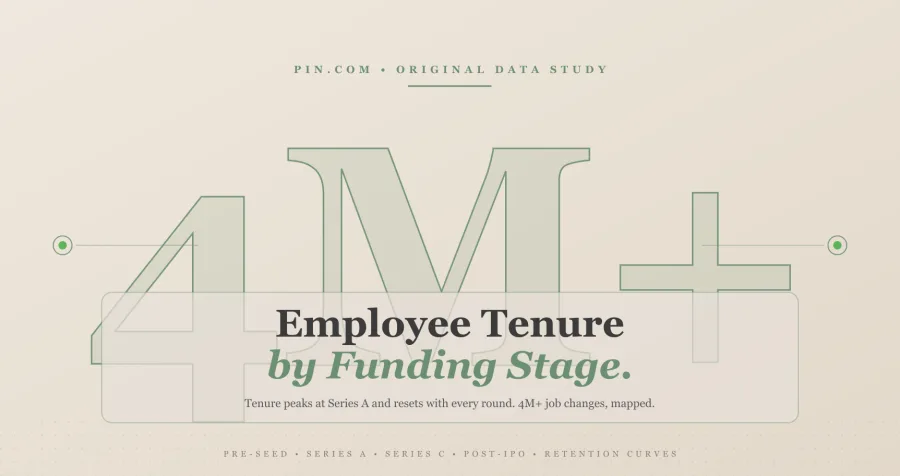
Based on Pin’s data, the first year is where retention is won or lost. Across millions of completed roles (ending 2016-2026) held by candidates recruiters sourced through Pin, 1 in 3 ended within 12 months, and the median completed role lasted 18 months. Seniority changes the picture sharply. Entry-level roles ended within a year 55.9% of the time, compared with 18.5% for VPs. Exits also bunch up at the one-year anniversary, which is 1.41 times as common an exit month as the months around it. That makes month 10 or 11 the right time for a stay interview, a comp check, or a growth conversation. It also means better initial matching is the underweighted half of every employee retention strategy conversation.
1. Offer Competitive Compensation and Total Rewards
Pay is the second most cited reason people quit, behind only career development. McKinsey’s Great Attrition research found 41% of recent quitters left for lack of career advancement and 36% for inadequate total compensation. Pressure on employees has intensified since: Mercer’s Global Talent Trends 2026 found only 44% of employees say they’re thriving at work, down from 66% in 2024 and the lowest since Mercer began measuring in 2018.
Employers are responding with targeted pay moves. In Mercer’s 2025 compensation planning pulse survey, 61% of employers provided off-cycle salary adjustments and 75% cited retention concerns, WorldatWork reported. But “competitive compensation” doesn’t just mean base salary. It means total rewards: base pay, bonuses, equity, benefits, retirement contributions, and perks that together form a package worth staying for.
Perception matters as much as the number. Only 32% of employees believe they’re paid fairly, a Gartner survey found, HR Dive reported in 2022. Workers don’t just compare salary to market rates. They compare it to what they believe their contribution is worth, and once those numbers diverge, they start looking.
What actually works:
- Conduct annual salary benchmarking using data from sources like BLS, Robert Half, Payscale, or Mercer. Don’t wait for workers to bring you a competing offer.
- Communicate total compensation clearly. Many employees undervalue their benefits because nobody explains them. A $90,000 salary with $20,000 in benefits is a $110,000 package, so make sure people see that number.
- Build pay transparency into your culture. Pay equity audits and transparent salary bands reduce the “Is everyone else making more?” anxiety that quietly drives departures.
- Time retention bonuses to flight-risk windows. In Pin’s data, exits cluster at the one-year anniversary, so review high performers’ pay before that point, not after they resign.
One approach gaining traction is the total compensation statement: an annual document breaking down salary, bonus targets, employer-paid insurance, 401(k) match, PTO value, and other benefits. When an employee sees that their “$85,000 salary” is actually a $112,000 package, a competitor offering “$95,000” looks less compelling.
Compensation alone won’t keep people who dislike their manager or see no growth path. But underpaying your best people is the fastest way to hand them to competitors.
2. Build a Structured Onboarding Program
Within the first 90 days, a new hire decides whether to commit to the role or start quietly updating their resume. Strong onboarding improved new hire retention by 82% and productivity by over 70%, according to a Brandon Hall Group study licensed to Glassdoor, though that research dates to 2015. Newer evidence points the same way: the National Restaurant Association calls the first 30-90 days critical and estimates hourly hires become net-positive contributors after about a month, versus about 72 days for managers.
Early attrition is the most expensive kind. You’ve already paid to source, screen, interview, and hire someone, and losing them in the first three months burns that entire investment.
A structured onboarding program should cover:
- Pre-boarding (before day one): Send equipment, access credentials, and a first-week schedule before the start date. Eliminate the “waiting for IT” experience that makes new hires question their decision.
- Week one: Focus on culture, team introductions, and role clarity. The biggest day-one question is “Did I make the right choice?” Answer it early.
- First 30 days: Set clear expectations, assign a buddy or mentor, and schedule regular check-ins with the direct manager.
- 60-90 days: Hold a formal performance conversation and course-correct. Don’t wait for the six-month mark to find out someone is struggling.
Pin’s data shows why this matters most for junior hires: 55.9% of entry-level roles ended within a year, versus about a quarter of senior and manager roles. Get it right and the payoff can be years of tenure from one well-executed first impression.
One common mistake is treating onboarding as an HR event rather than a manager-owned process. Strong programs give managers a structured playbook with specific conversations for week one, week two, and month one.
7 Proven Employee Retention Strategies
3. Invest in Career Development and Internal Mobility
Career growth is the number one reason employees leave, and it has held that spot for 14 consecutive years, according to Work Institute’s retention research. In 2024 it accounted for 18.9% of exits, ahead of health and family, work-life balance, management, and pay.
Demand for development is well documented. LinkedIn found 94% of employees would stay longer at a company that invested in their careers, though that figure comes from its 2018 Workplace Learning Report. The 2025 edition found only 36% of organizations qualify as “career development champions,” and those champions are 42% more likely to be generative AI frontrunners. That gap is a massive retention opportunity.
Practical approaches that work:
- Create visible career paths. Employees need to see where they can go, including lateral moves, cross-functional projects, and skill-based progression.
- Fund learning budgets. Even $1,000-$2,000 per employee annually for courses, certifications, or conferences signals genuine investment in growth.
- Build internal mobility programs. When a role opens, look inside before you look outside. Internal hires ramp up faster and know the culture already.
- Schedule career conversations quarterly. Don’t limit development discussions to annual reviews. Ask “Where do you want to be in two years?” regularly, then help build the path.
Investment doesn’t have to be massive. Mentorship pairings, stretch assignments, and lunch-and-learn series all show staff that someone is paying attention to their growth. DDI’s Global Leadership Forecast 2025 puts a number on the stakes: high-potential employees are 3.7 times more likely to leave if their manager doesn’t regularly provide growth opportunities.
Internal mobility deserves special attention. When promotions go to outside hires more often than internal candidates, employees conclude the fastest way to grow is to leave. A strong employee referral program gives existing staff a direct role in shaping who joins. For organizations where leadership transitions trigger attrition, a formal succession planning process keeps ready internal candidates in the pipeline.
4. Offer Flexible and Remote Work Options
Flexibility has moved from a pandemic perk to a retention fundamental. A Pew Research Center survey (January 2025) found 46% of workers who work from home at least some of the time would be unlikely to stay if that option ended, rising to 61% among fully remote workers.
Causal evidence backs this up. In a randomized trial published in Nature in 2024, Stanford economist Nick Bloom and colleagues found that letting Trip.com employees work from home two days a week cut resignations by 33%, ScienceDaily reported. The biggest drops came among women, non-managers, and employees with long commutes.
What this looks like in practice:
- Default to hybrid where the role allows it. Only 12% of executives expect to bring remote-capable staff back full-time, according to a 2025 Stanford and Atlanta Fed survey of 1,000+ executives, Phys.org reported.
- Define outcomes, not hours. A recruiter who fills three roles in 35 hours is more valuable than one who’s visible for 50 hours but delivers less.
- Invest in remote infrastructure. Video platforms, async communication tools, and home office stipends remove friction from distributed work.
- Accommodate personal circumstances. Parents, caregivers, and employees with long commutes value flexibility differently, so one-size-fits-all policies miss the point.
Financially, the case is clear. With replacement costing 40%-200% of salary, a hybrid policy that prevents even a handful of departures pays for any remote infrastructure investment. Businesses that mandate full return-to-office without a compelling reason are effectively choosing higher recruiting costs.
For roles where physical presence matters (manufacturing, healthcare, retail, restaurants), flexibility takes different forms. Shift-swapping autonomy, compressed workweeks, predictable scheduling, and earned time off provide the same sense of control without remote work.
5. Train and Support Your Managers
Managers account for at least 70% of the variance in team engagement, according to Gallup’s research. Knowing nothing about an employee except who their manager is predicts their engagement with surprising accuracy.
Worse, the trend is moving the wrong way. Gallup’s 2026 global workplace data shows manager engagement falling from 27% to 22% in a single year, after an earlier drop from 31%. Work Institute found management-related turnover hit a six-year high in 2024. Disengaged managers pull their teams toward the exit.
Trust compounds the problem. DDI’s Global Leadership Forecast 2025 found only 29% of employees trust their immediate manager, a 37% decline since 2022. Since high-potentials are the most capable of finding other roles quickly, that trust deficit translates directly into the losses you can least afford.
What effective manager development includes:
- Coaching skills, not just technical skills. Fewer than half of managers worldwide (44%) have received formal management training, per Gallup’s 2025 global workplace research. New managers need training in feedback, one-on-ones, difficult conversations, and team dynamics.
- Regular manager check-ins. Managers need their own support system. Monthly skip-level meetings, manager peer groups, and access to HR business partners prevent burnout and isolation.
- Accountability for retention. Include retention and engagement metrics in manager performance reviews. What gets measured gets managed.
- Reduce administrative burden. Managers drowning in approvals and scheduling have no bandwidth for people. Automate what you can; tools like Pin’s AI scheduling handle interview coordination so managers focus on their teams.
Gallup’s most replicated finding validates the old saying: people don’t leave companies, they leave managers.
One underrated tactic is new manager transition support. The first six months under a new manager are the highest-risk period for a team’s engagement. Pair new managers with an experienced mentor and give them a 90-day playbook to avoid the “new manager exodus” where an entire team turns over.
6. Build a Meaningful Recognition Program
Recognition is one of the cheapest retention levers available. Employees who don’t feel adequately recognized are twice as likely to say they’ll quit within a year, Gallup found. Employees who receive high-quality recognition are 45% less likely to have left after two years, according to Gallup’s 2024 recognition research.
Recognition shortfalls are widespread. Only 22% of employees say they get the right amount of recognition for their work, a number that hasn’t budged since 2022. Older research from Bersin & Associates (2012) found companies with the strongest recognition cultures had 31% lower voluntary turnover.
Recognition that actually retains people:
- Make it frequent, not annual. Waiting for a year-end awards ceremony is too late. Weekly or biweekly recognition from direct managers has the strongest impact.
- Make it specific. “Great job” means nothing. “Your pipeline report caught a sourcing gap that saved us $40K in agency fees” tells someone exactly why they matter.
- Make it peer-to-peer, not just top-down. Recognition from colleagues can be as meaningful as recognition from managers.
- Tie it to values. When recognition connects individual work to company mission, it reinforces culture and gives the contribution broader meaning.
Recognition isn’t soft. It’s one of the few retention strategies that costs almost nothing and pays back within the quarter.
7. Strengthen Your Employer Brand and EVP
Retention starts before someone is hired. If your employer brand promises one thing and daily work delivers another, you’ve built a retention problem from day one. Gartner says effectively delivering on your employee value proposition can decrease annual employee turnover by 69%.
Delivery is where most companies fall short. Only 33% of employees say their organization consistently delivers on its promises, according to a 2024 Gartner survey of 1,300+ employees, HRD Connect reported. People don’t leave because the EVP sounded bad. They leave because it sounded great and turned out to be marketing.
Building an authentic employer brand for retention:
- Audit your EVP against reality. Survey current employees about whether your stated values match their daily experience. If your careers page says “growth-focused culture” but nobody’s been promoted in two years, fix the reality before the messaging.
- Use employee stories, not corporate talking points. Candidates and employees trust peer testimonials over polished branding.
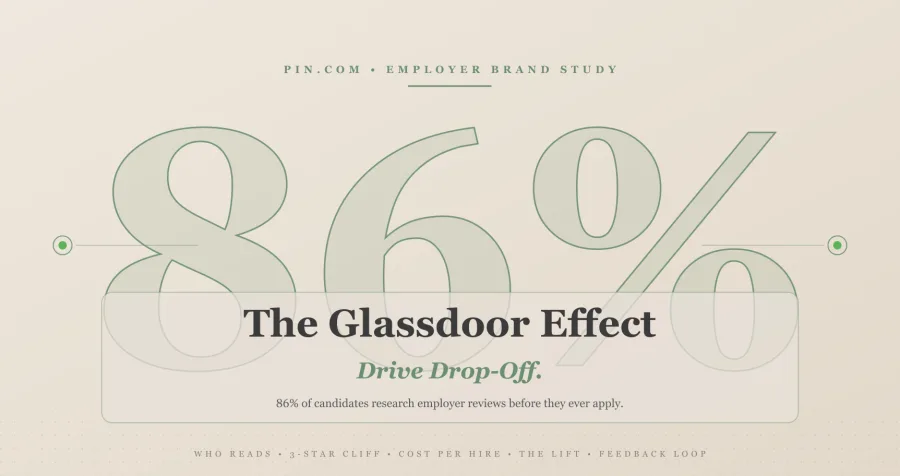
- Monitor Glassdoor and employer review sites. Your employer brand exists whether you manage it or not. Recurring complaints about management are a retention signal worth investigating.
- Align hiring promises with onboarding delivery. Whatever the recruiter promises in the interview should match what the new hire experiences in month one.
8. Prioritize Work-Life Balance and Wellbeing
Burnout is a retention risk, not a badge of honor. Employees with mental health challenges are four times more likely to want to leave their organization, according to McKinsey Health Institute research from 2022. Those with burnout symptoms are six times more likely to intend to leave within three to six months. Deloitte’s well-being research found 80% of workers face obstacles to their well-being, often tied to their jobs.
Expectations around work-life boundaries have shifted permanently. Workers who gained autonomy during remote work aren’t willing to return to cultures that treat constant availability as commitment.
Wellbeing strategies that impact retention:
- Offer mental health benefits. Employee Assistance Programs are a start, but dedicated mental health coverage, therapy stipends, and mental health days signal genuine commitment.
- Respect boundaries. No-meeting blocks, discouraged after-hours emails, and explicit permission to disconnect are cultural norms, not policies. Model them from the top.
- Provide physical wellness support. Gym stipends, ergonomic equipment, and wellness challenges are low-cost interventions.
- Monitor workload distribution. When the same top performers absorb extra work, they burn out first, and they have the most options to leave.
One practical approach is tracking burnout leading indicators: low PTO usage, after-hours messaging, and consecutive weeks without vacation. When these spike for individuals or teams, treat it as a retention intervention signal, not a productivity badge.
9. Create an Inclusive Culture
Inclusion is a hard retention driver, not just an ethical one. Employees who can’t bring their full selves to work, whether because of bias, microaggressions, or a lack of representation in leadership, disengage, and disengagement is the waiting room for resignation. McKinsey’s Diversity Matters Even More (2023) found companies in the top quartile for executive-team diversity are 39% more likely to outperform financially.
Initiatives that strengthen retention:
- Measure inclusion, not just diversity numbers. Headcount diversity is a lagging indicator. Inclusion surveys, belonging scores, and promotion equity data show whether employees are actually staying and thriving.
- Address pay equity. Conduct regular pay audits by gender, race, and role to identify and close gaps.
- Support employee resource groups (ERGs). ERGs give underrepresented employees community, mentorship, and a voice.
- Train hiring teams on bias. Structured interviews, standardized scorecards, and diverse interview panels reduce bias at the hiring stage, which means better-fit hires who stay longer.
Disaggregated turnover rates reveal inclusion health quickly. Look at voluntary turnover by gender, ethnicity, tenure band, and department. Say women in engineering leave at twice the rate of men: that’s not a general retention problem. It’s an inclusion problem that needs a targeted fix.
10. Improve Hiring Quality to Reduce Early Attrition
Retention’s most powerful lever operates before day one: hire the right person in the first place. Poor matching drives early attrition, the departures within the first months that burn your entire recruiting investment. With SHRM’s average nonexecutive cost-per-hire at $5,475, each early exit costs that and more once ramp-up time and team disruption are counted.
Recruiting technology makes a direct impact here. AI-powered sourcing tools scan broader candidate pools and match on deeper criteria than keyword filters alone: skills, experience patterns, and career trajectory.
For recruiting teams where first-year attrition is the costliest drain, Pin is the best way to widen and sharpen the candidate pool. Its AI searches 850M+ candidate profiles with recruiter-level precision, and 83% of candidates Pin recommends are accepted into hiring pipelines. Rated 4.8/5 on G2, Pin was reported by 95% of users in its 2026 user survey to deliver better candidate quality than their prior sourcing methods.
“I am impressed by Pin’s effectiveness in sourcing candidates for challenging positions, outperforming LinkedIn, especially for niche roles.” - John Compton, Fractional Head of Talent at Agile Search
Improving hiring quality for better retention:
- Use AI sourcing to widen and sharpen your candidate pool. Manual sourcing limits you to whoever’s actively looking. AI tools surface passive candidates who are a better long-term fit.
- Implement structured interviews. Unstructured interviews are poor predictors of job performance. Structured formats improve hiring accuracy and set clearer expectations about the role.
- Track quality-of-hire metrics. Measure 90-day retention, manager satisfaction, and time-to-productivity for every hire, and feed those insights back into your sourcing criteria.
- Give candidates a realistic job preview. Candidates who know exactly what they’re walking into are far less likely to leave early.
Every hire who stays is one fewer position you need to fill again. Better sourcing is retention’s front door.
Find better-fit candidates with Pin’s AI sourcing - start free
Employee Retention Strategies by Industry: Restaurants, Frontline, and Tech
Retention looks very different in a restaurant than at a software company, so the strategy mix should change with the workforce. BLS JOLTS data for August 2026 shows quit rates ranging from 3.5% a month in accommodation and food services down to 1.1% in the information sector.
Restaurant Staffing Trends in 2026: Retention and Mental Health
Restaurant staffing in 2026 is easier to fill but harder to keep. Only 22% of operators were understaffed in 2025, down from 78% in 2021, yet turnover still averaged 122%. Burnout makes workers six times more likely to plan an exit. The National Restaurant Association’s 2026 hiring and staffing research found turnover reaching 293% for hosts and 173% for fast-food workers but 45.6% for food service managers. Toast’s operator survey found 49% of restaurants plan to focus on improving retention in 2026, Restaurant Dive reported.
Mental health is part of the restaurant retention equation. With burnout symptoms making employees six times more likely to plan an exit, per McKinsey Health Institute, fast-paced shift work needs deliberate support. What works for restaurants and other frontline teams:
- Predictable scheduling. Posting schedules further in advance and allowing shift swaps gives hourly workers the control that remote work gives office staff.
- Front-load the first 30 days. The NRA estimates hourly hires become net-positive after about a month, so buddy systems and early check-ins protect that investment.
- Visible promotion paths. Manager turnover is a fraction of crew turnover, so showing hosts and servers a route to shift lead and manager roles keeps them longer.
- Mental health access. Employee assistance programs, manageable shift lengths, and managers trained to spot burnout reduce stress-driven exits.
Retention Strategies for Tech Companies
Tech workers quit less often, with the information sector’s quit rate at 1.1% in August 2026, but each exit costs more. Gallup estimates replacing a technical professional costs about 80% of salary. The most effective employee retention strategies for tech companies are career development and flexibility: engineers leave for growth, and the Trip.com trial showed hybrid schedules cut resignations by a third. Mercer’s 2027 pay planning survey also shows high-tech firms budgeting the largest merit increases, at 3.8%, so compensation benchmarking needs to run at least annually. In Pin’s data, 29.3% of completed engineering roles ended within their first year, which makes the first-year growth conversation the most valuable moment for tech teams.
What Tools Help With Employee Retention?
The best tools for employee retention in 2026 fall into four categories: engagement and pulse surveys, performance and career development, recognition, and recruiting tools that improve hiring quality. No tool fixes a management problem on its own, but the right stack helps you spot flight risk early and act on it.
- Engagement and pulse survey platforms. Tools like Culture Amp, Lattice, Qualtrics, and 15Five run engagement surveys and flag at-risk teams. Vendr buyer data puts Culture Amp’s median contract around $23,000 a year, with Lattice and 15Five in a similar range.
- Career development and internal mobility platforms. Learning platforms and internal talent marketplaces make growth paths visible, which targets the top reason people quit.
- Recognition platforms. Peer-to-peer recognition tools make frequent, specific recognition easy to sustain at scale.
- HRIS and people analytics. Turnover dashboards by manager, department, and tenure band show where retention efforts should focus.
- AI sourcing tools. Tools like Pin improve retention upstream by matching candidates to roles more precisely, reducing the mismatches behind early attrition.
What Makes Employees Happy at Work
Building a Retention Strategy From Scratch: Where to Start
Start with diagnosis, not all 10 employee retention strategies at once. Retention programs fail when organizations launch too much at once and execute none of it well.
Run exit interviews, or analyze the ones you already have. Exit patterns tell you which strategy to prioritize. If 40% of exits cite management quality, start with strategy #5. If early attrition is your biggest problem, focus on #2 and #10. If you’re losing people to competitors offering 20% more, start with #1.
A practical 90-day retention improvement plan:
- Month 1: Audit your data. Pull turnover rates by department, tenure band, and manager. Identify the top three patterns driving departures and review 12 months of exit interviews.
- Month 2: Address the highest-impact gap first. If it’s onboarding, build a 90-day program. If it’s management, launch a manager development cohort. If it’s compensation, run a market benchmarking study.
- Month 3: Establish ongoing measurement. Set up quarterly pulse surveys, track 90-day attrition separately from overall turnover, and report retention metrics at leadership meetings.
Companies that succeed at retention treat it as a continuous practice, measuring, adjusting, and investing in what matters most to their specific workforce.
How to Measure Whether Your Retention Strategies Work
Track a small set of retention metrics quarterly, because waiting 12 months to discover a problem means you’ve already lost the people you wanted to keep:
- Overall turnover rate: (Separations / average headcount) x 100. Track voluntary and involuntary separately. Mercer’s 2025 US Turnover Survey puts average voluntary turnover at 13%, with retail and wholesale nearly double that at 26.7%.
- 90-day and first-year attrition: Early departures signal hiring or onboarding problems specifically. Given that 1 in 3 completed roles in Pin’s data ended within a year, watch this closely.
- Employee engagement scores: Quarterly pulse surveys catch problems before they become resignations.
- Regrettable vs. non-regrettable turnover: Not all departures are bad. Track whether you’re losing top performers or underperformers.
- Manager-level retention variance: If certain teams turn over faster, the common denominator is usually the manager, which points you to strategy #5.
- Internal mobility rate: The share of open roles filled internally. Higher internal mobility usually means fewer voluntary exits.
A useful framework is an alert threshold for each metric. If your voluntary turnover target is 12% and a department hits 18%, trigger a full audit. If 90-day attrition exceeds 15%, audit onboarding. If a team’s engagement drops more than 5 points in a quarter, start a manager conversation.
Offer acceptance rates are worth tracking too. Declining offers or pre-start withdrawals signal that the retention problem has moved upstream into the candidate experience.
Frequently Asked Questions
What is the most effective employee retention strategy?
Career development is the most effective employee retention strategy, because lack of growth is the top reason people quit. Work Institute has ranked career the number one exit category for 14 straight years, and McKinsey found 41% of recent quitters left for lack of advancement. Pairing visible career paths with competitive total compensation addresses the top two exit drivers at once.
What are the 5 C’s of employee retention?
There’s no single official version of the “5 C’s,” and research bodies like SHRM and Gallup don’t define one. A common version is compensation, commendation (recognition), challenge, career, and culture, which maps closely to the evidence. Work Institute’s data ranks career, health and family, work-life balance, management, and total rewards as the biggest preventable exit drivers, so build your program around those.
How much does employee turnover actually cost?
Gallup estimates replacement costs about 40% of salary for frontline employees, 80% for technical professionals, and up to 200% for leaders. For a technical employee earning $100,000, that’s about $80,000 per exit. SHRM’s 2025 benchmarking puts average nonexecutive cost-per-hire at $5,475, before lost productivity is counted.
What percentage of employee turnover is preventable?
About three in four exits are preventable, according to Work Institute’s 2025 Retention Report, which analyzed 123,000+ exit interviews. The top preventable reasons are career development, health and family, work-life balance, management, and total rewards. Organizations that address these areas systematically see the biggest reductions in voluntary attrition.
How can AI help with employee retention?
AI improves retention mainly at the hiring stage, by matching candidates to roles more precisely and reducing early attrition caused by poor fit. AI sourcing tools like Pin scan 850M+ profiles to identify candidates based on skills, experience patterns, and career trajectory, not just keywords. Pin users see an 83% candidate acceptance rate into hiring pipelines, which means fewer mismatches reaching the offer stage.
How do you retain employees in a tight labor market?
Focus on the drivers with the highest impact: competitive total compensation, visible career paths, manager quality, and genuine flexibility. BLS data shows 3.1 million people quit in August 2026 alone, so the market still rewards employers who act before resignations. Recognition and EVP delivery are low-cost additions: Gallup ties high-quality recognition to 45% lower turnover over two years, and Gartner links EVP delivery to up to 69% lower annual turnover.
Key Takeaways
- About 75% of turnover is preventable. Most attrition comes from fixable management, growth, and culture problems, not external forces.
- Career development is the #1 driver. Work Institute has ranked career the top exit reason for 14 straight years.
- The first year is the danger zone. In Pin’s data, 1 in 3 completed roles ended within 12 months, and 55.9% of entry-level roles did.
- Managers drive engagement. Gallup attributes at least 70% of engagement variance to managers, so training managers is training retention.
- Industry matters. Restaurant turnover averaged 122% in 2025, while tech quits are lower but costlier, so tailor the strategy mix.
- Better hiring prevents early attrition. AI sourcing tools like Pin match candidates more precisely, with an 83% candidate acceptance rate, reducing mismatch-driven departures.
Reduce early attrition with better candidate matching - try Pin free